
How to search ACHIS in WA
How to search ACHIS, the WA Aboriginal Cultural Heritage Inquiry System: what the Register, Lodged and Historic layers mean, and what a nil result is not.
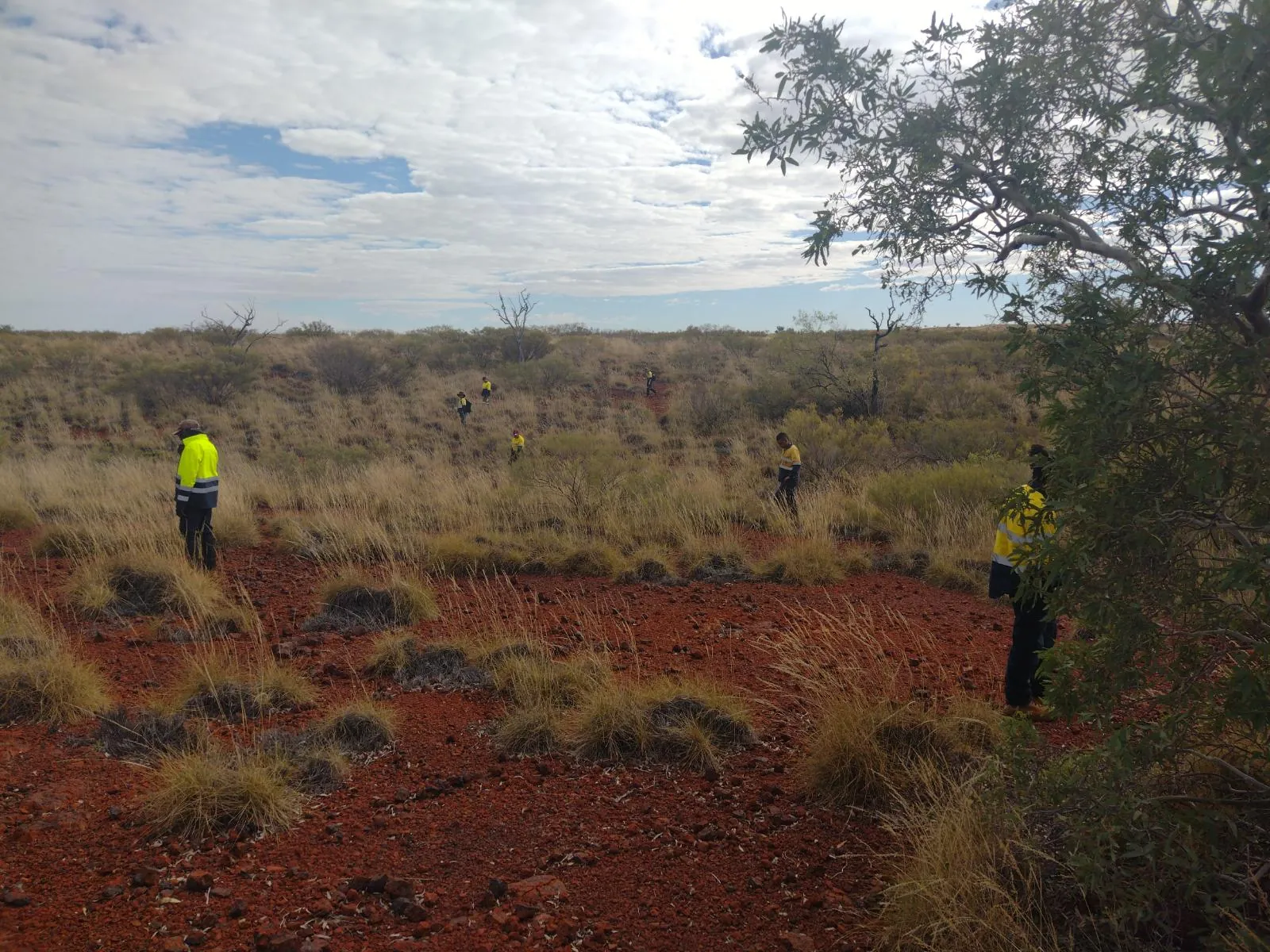
The Aboriginal Cultural Heritage Inquiry System (ACHIS) is the Department of Planning, Lands and Heritage (DPLH) map viewer for known Aboriginal heritage in Western Australia. For most projects that involve ground disturbance, it is the first place to look.
This guide explains how to run a search, what each result category means, and what a search cannot tell you. If you need help reading the results for a particular project, see our due diligence desktop assessment service.
Searching the Aboriginal Cultural Heritage Inquiry System takes a few minutes, but the results are easy to misread. A blank map does not mean there is no Aboriginal heritage on your land, and a recorded place nearby does not on its own mean a project cannot proceed. This guide sets out what DPLH says the system shows, how to read each layer, and when it makes sense to bring in a heritage professional.
What ACHIS is
DPLH describes ACHIS as a system that "provides locations and information about Aboriginal heritage in Western Australia". It is a map viewer that you search by address, area, ID or name.
Older documents call it the Aboriginal Heritage Inquiry System (AHIS), and many people still search for it under that name. The current system sits alongside the ACHknowledge portal, which is where you request advice, report Aboriginal heritage, lodge applications and give a section 18 notice to the Committee via the Registrar of Aboriginal Sites. ACHIS is for looking up records; ACHknowledge is for dealing with DPLH.
The law that applies is the Aboriginal Heritage Act 1972 (the Act). DPLH describes it as the current law governing the protection and management of Aboriginal heritage in Western Australia, restored on 15 November 2023.
How to search ACHIS
DPLH's instructions for a basic property search are:
- Open ACHIS from the DPLH "Find Aboriginal cultural heritage in WA" page.
- Click "What do you want to do" at the top of the page and select the "Search for ACH Directory" filter.
- Enter the street address.
- Accept the disclaimer.
- Check the left-hand panel for any Aboriginal heritage results.
Results can be viewed as a list or a table, saved as a PDF search report (with or without a map), or exported to Excel or CSV.
A few practical points from the ACHIS User Guide and DPLH:
- You can search by area for the ACH Register, ACH Lodged, ACH Historic and Heritage Surveys layers, or by ID, name or legacy ID.
- Shapefile and coordinate searches do not support GDA2020. Convert your data to GDA94 first.
- Search the whole area your project will disturb, not just the lot address. Access tracks, service corridors, laydown areas and offsets can all sit outside the title you started with.
What the results mean
ACHIS uses specific terms, and it helps to use them the same way DPLH does. Registered Aboriginal Sites appear in the ACH Register layer, places with information being verified appear in the ACH Lodged layer, and historic records appear in the ACH Historic layer. A search can also return past survey reports, protected areas and native title parties.
In short, a Registered Aboriginal Site means the Act applies, a lodged place should be treated as if it might, and a survey record tells you where to look for more information.
| Layer or category | What DPLH says it shows | What it means for your project |
|---|---|---|
| ACH Register | Registered Aboriginal Sites: places assessed as sites under the Act by the Aboriginal Cultural Heritage Committee or its predecessor. | The Act applies. Works that would harm the site need consent under section 18 or another authorisation. |
| ACH Lodged | Lodged places: information given to the Registrar that has not yet been assessed, or was assessed and found to have insufficient information. | DPLH recommends treating lodged places as places the Act might apply to. Plan around them until their status is clear. |
| ACH Historic | Historic records. | Read the record and ask DPLH what it means for your land before relying on it either way. |
| Heritage Surveys | A directory of past Aboriginal heritage surveys. | Shows where survey work has been done. A survey report may help show whether places or sites are present. |
| Protected Areas | Protected areas under the Act. | Check whether your land is inside one before planning works. |
| Native Title | Native title applications, determinations and Indigenous Land Use Agreements. | Helps identify the Aboriginal people and organisations who may need to be consulted. |
Registered Aboriginal Sites
These are places assessed as meeting section 5 of the Act, by the Aboriginal Cultural Heritage Committee or, before 15 November 2023, the former Aboriginal Cultural Material Committee. Section 38 requires the Registrar, so far as practicable, to keep a register of places and objects to which the Act applies. If your project would harm a registered site, you would need consent under section 18 (or another authorisation) before the work proceeds. Our guide to section 18 of the Aboriginal Heritage Act explains that process.
Lodged places
A lodged place is a place DPLH holds information on that the Committee has not yet assessed, or has assessed and found there was not enough information to decide. The DPLH guidelines describe these as "Aboriginal heritage places" and recommend that they "be treated as places that the Act might apply to". In practice, a lodged place should get the same care as a registered site until its status is resolved.
The heritage survey directory
ACHIS includes a directory of Aboriginal heritage surveys. DPLH says this directory "may indicate whether or not Aboriginal places or sites are present". A survey polygon over your land shows that work was done there at some time. It does not tell you the scope of that work, whether it covered your footprint, or what it found, until you read the report.
What a "no result" does and does not mean
A search with no Registered Aboriginal Sites or lodged places is useful information, but it is not a clearance. The DPLH guidelines state that "the Act protects all Aboriginal sites including sites about which the Department does not hold any information".
Section 5 of the Act sets out the places it applies to, including places where Aboriginal people have left objects, sacred, ritual or ceremonial sites, places associated with Aboriginal people that are of historical, anthropological, archaeological or ethnographical interest, and places where objects are traditionally stored. Section 17 makes it an offence to excavate, destroy, damage, conceal or in any way alter an Aboriginal site without authorisation or consent. Neither section depends on a site being registered.
DPLH also states that "there are no activities that are exempt under the Act", and that if there is no risk of harm to Aboriginal heritage from your planned activity, no approval is required. The question is whether your activity is likely to harm a site, recorded or not. The table below sets out what a search can and cannot answer.
| What the search tells you | What it does not tell you |
|---|---|
| Whether DPLH holds information on Registered Aboriginal Sites or lodged places in your search area. | Whether there are Aboriginal sites that have never been recorded. The Act protects those too. |
| Whether a heritage survey has been done in or near the area. | Whether that survey covered your whole footprint, or how it was carried out, until you read the report. |
| The general locality of restricted places, shown with a dithered boundary. | The exact location of a restricted place, or whether your activity affects the site itself. |
| Native title parties connected with the area. | Who the right people are to speak for a particular place. That comes from consultation. |
| A starting point for your due diligence. | Whether you need consent under section 18. That depends on whether your activity is likely to harm a site. |
Restricted information and dithered boundaries
Some Aboriginal heritage is culturally sensitive, and its exact location is not shown to the public. Where a record is marked "Restricted Place = Yes", ACHIS shows a dithered boundary. DPLH says this boundary shows "the general locality of the heritage rather than its specific location".
A dithered boundary is often much larger than the place itself. DPLH notes that offences under the Act only apply to the Aboriginal site, not to the whole dithered area, and that the Department can advise whether your activity would affect the site itself or only the surrounding boundary.
If your project sits inside a dithered boundary, contact DPLH or engage a heritage consultant to make that enquiry. Do not try to work out the location of a restricted place yourself, and do not share restricted information you are given beyond the people who need it.
Requesting site files and reports
The ACHIS record is a summary. To understand a place or a past survey, you usually need the site file or the survey report. DPLH can provide access to specific heritage information and reports, "provided they do not contain culturally sensitive information", or where the appropriate permissions exist.
Requests go through the Aboriginal Heritage Enquiry Form on the ACHknowledge portal. You can also call DPLH on (08) 6551 8002 and select option 1. Some reports may not be released, or only with permission.
When to get a desktop assessment or a survey
An ACHIS search is the start of due diligence, not the end. Whatever the scale of the project, the Act still protects every Aboriginal site, so the question is whether your activity risks harming one.
A desktop assessment is a sensible next step when:
- a Registered Aboriginal Site, lodged place or dithered boundary falls within or close to your project area
- survey records exist but you do not know what they covered or found
- no survey has covered your land and you plan to disturb ground that has not been disturbed before
- you need a written record of your due diligence for a lender, approval authority or client.
A heritage survey, with the relevant Aboriginal people, may be needed when a desktop assessment shows a real risk of harm, or when you are preparing a section 18 notice. The DPLH guidelines say consultation with Aboriginal people is of particular importance in informing a section 18 application, and that only final heritage survey reports are accepted with a notice, not drafts. If you identify a risk of harm to an Aboriginal site during an activity, the guidelines say to stop the activity immediately and contact the Department for advice. Section 15 of the Act also requires people who know of certain Aboriginal sites or objects to report them to the Registrar or a police officer, unless they have reason to believe the Registrar already knows.
Our article on the types of surveys and assessments in Aboriginal cultural heritage explains the difference between desktop, archaeological and ethnographic work.
How Trace Archaeology helps
Trace Archaeology's archaeologists and anthropologists work on Aboriginal heritage projects across Western Australia and the Northern Territory. We can:
- search ACHIS over your full project footprint and explain what each record means for your works
- request available site files and survey reports from DPLH and review them against your plans
- prepare a due diligence desktop assessment that records the searches, the results and the options
- plan and carry out Aboriginal heritage surveys with the relevant Aboriginal people where a survey is needed.
See our Aboriginal heritage services and wider heritage consulting services in Perth for the full range of work, or read our guide to section 18 consent. To talk about a site, contact us.
Frequently asked questions
What is the difference between a registered site and a lodged place in WA?
A Registered Aboriginal Site has been assessed as a site under the Act, by the Aboriginal Cultural Heritage Committee or its predecessor. A lodged place is one DPLH holds information on that has not been assessed, or did not have enough information for a decision. DPLH recommends treating lodged places as places the Act might apply to.
If ACHIS shows nothing on my land, do I still need to think about Aboriginal heritage?
Yes. The Act protects all Aboriginal sites, including sites DPLH holds no information on. A nil result means no records were found, not that no sites exist. Whether you need to do more depends on whether your activity is likely to harm a site.
Why does an ACHIS boundary look much bigger than the site?
Where a place is restricted, ACHIS shows a dithered boundary that gives the general locality rather than the exact location. Offences apply to the site, not the whole dithered area. DPLH can advise whether your activity affects the site itself.
This article is general information as at October 2026, not legal advice.
References
All accessed 30 October 2026.
- Department of Planning, Lands and Heritage, Find Aboriginal cultural heritage in WA, last updated 27 March 2025.
- Department of Planning, Lands and Heritage, ACHIS User Guide, version 3.2, 20 December 2023.
- Department of Planning, Lands and Heritage, Aboriginal Heritage in Western Australia, last updated 23 April 2026.
- Department of Planning, Lands and Heritage, Aboriginal Heritage Act 1972 Guidelines, July 2026.
- Aboriginal Heritage Act 1972 (WA), sections 4, 5, 15, 17, 18 and 38, consolidated version 04-n0-00, current from 28 May 2026.
- Department of Planning, Lands and Heritage, ACHknowledge portal, last updated 2 May 2024.
- Department of Planning, Lands and Heritage, ACHknowledge Aboriginal Cultural Heritage Portal.
- Department of Aboriginal Affairs and Department of the Premier and Cabinet, Aboriginal Heritage Due Diligence Guidelines, version 3.0, 30 April 2013 (cited for the former system name AHIS only).
Other latest news












Talk to our team
Our archaeologists, ecologists and town planners can tell you what this means for your site.