Heritage areas are set up through local planning schemes, under the deemed provisions in Schedule 2 of the Planning and Development (Local Planning Schemes) Regulations 2015. Part 3 of the deemed provisions covers heritage protection, including the heritage list (clause 8) and heritage areas (clause 9). This guide refers to the consolidated version as at 6 October 2026.
What is a heritage area?
Under clause 9 of the deemed provisions, a local government can designate an area as a heritage area if, in its opinion, special planning control is needed to conserve and enhance the cultural heritage significance and character of the area.
The Heritage Council's Guidelines for Heritage Areas (March 2023) describe heritage areas as "select areas with special qualities" that will generally be quite rare within a locality. They are larger than individual places and have a cohesive physical form with an identifiable aesthetic, historic or social theme.
The guidelines also say an area should not be declared merely because a mix of heritage places sit close together. Heritage elements should predominate, although there is no fixed ratio, and areas dominated by later, low-quality development are unlikely to qualify.
Heritage area or character area?
State Planning Policy 3.5 Historic Heritage Conservation (SPP 3.5) separates historic heritage significance from urban or neighbourhood character. Not all areas of urban character have heritage significance that warrants protection, and controls in character areas do not necessarily restrict demolition or building design.
The heritage areas guidelines agree: heritage areas keep heritage fabric through conservation, while character areas guide new development without requiring existing fabric to be kept.
Heritage area, heritage list and State Register
WA heritage listings are made under different laws by different bodies, and a place can be on more than one.
| Heritage area | Heritage list | State Register | |
|---|---|---|---|
| What it covers | A cohesive area managed as a whole | Individual places, and groups or precincts | Places of State cultural heritage significance |
| Made under | Local planning scheme, deemed provisions clause 9 | Local planning scheme, deemed provisions clause 8 | Heritage Act 2018 |
| Who decides | Local government | Local government | Minister, on the Heritage Council's recommendation |
| Planning effect | Heritage-protected place; the area's local planning policy applies | Heritage-protected place; heritage controls in the scheme apply | Heritage-protected place; certain proposals referred to the Heritage Council |
In short, the heritage list and heritage areas are local planning tools set by the local government, while the State Register sits under the Heritage Act 2018 and is reserved for places of State significance.
A local heritage survey is different again. The Department of Planning, Lands and Heritage (DPLH) says a local heritage survey identifies and records places that are, or might become, of cultural heritage significance, and in itself has no statutory role.
How a heritage area is designated
The heritage areas guidelines set out this sequence.
| Step | What happens |
|---|---|
| 1. Identify | Use the local heritage survey to find candidate areas, such as a concentration of heritage places or a group or precinct already identified. |
| 2. Assess | Research the area's history, physical qualities and values, and prepare a statement of significance informed by an experienced heritage professional. |
| 3. Check suitability | Confirm the area meets the inclusion guidelines and suits the zoning and planning intent for the locality. |
| 4. Designate | The local government forms the view that special planning control is needed and designates the area under clause 9. |
| 5. Adopt a policy | Adopt a local planning policy for the area with a boundary map, a statement of heritage significance and a record of heritage places. |
Put simply, designation rests on evidence of significance, and every heritage area needs its own local planning policy.
The local planning policy
Clause 9(2) requires a local planning policy for each heritage area. At a minimum it sets out a map of the area's boundaries, a statement about the area's heritage significance and a record of the places of heritage significance in it.
DPLH's Guidelines for Preparing a Local Planning Policy for Local Heritage (March 2023) say the general requirements and procedures for local planning policies are in Part 2 of the deemed provisions. A separate policy is required for each heritage area. Where a heritage area policy and the council's general heritage policy conflict, the policy for the heritage area prevails.
Consultation
DPLH's guidelines note that the general procedures for preparing local planning policies are in Part 2 of the deemed provisions. If your council writes to you about a proposed heritage area or policy, check the notice for how and by when to make a submission.
For comparison, the heritage list guidelines summarise clause 8(3) as requiring notice to each owner and occupier and a submission period of at least 21 days before a place is added to the heritage list.
What is a character statement?
"Character statement" is the everyday name for the document that explains what makes a heritage area or place significant and how that should guide change. The deemed provisions and DPLH guidelines do not use the term. They refer to a statement of significance and to the local planning policy for the area.
Drawing on the heritage areas guidelines, a character statement for a heritage area covers:
- Boundaries. A map of the area. The outer boundaries commonly follow road alignments or other readily defined limits, and may take in some non-heritage properties at the edges where controls are needed.
- Statement of significance. Value statements about the area's aesthetic, historic, scientific, social or spiritual values.
- Grading of places. Each place is graded by its contribution to the area. A basic scale is contributes or does not contribute. A more detailed scale is considerable, some or moderate, no contribution, and intrusive.
- Design guidance. Guidance on scale, form, materials and details, which may address roofs, walls, windows, verandahs, carports, fences, additions and new buildings.
In residential heritage areas, the local planning policy may amend or replace deemed-to-comply provisions of the R-Codes.
How a heritage area affects development approval
Places on the State Register, on a heritage list or within a heritage area are heritage-protected places under clause 1A of the deemed provisions. DPLH notes that many exemptions from development approval apply on the condition that the place is not a heritage-protected place.
The heritage areas guidelines say that, in general, works within a heritage area are not subject to the same exemptions as other projects. The local planning policy for the area can identify works that may proceed without development approval, by reference to clause 61 of the deemed provisions. Check the policy for your area before assuming something is exempt.
When approval is needed, the proposal is assessed against the local planning policy for the area. SPP 3.5 says development in a heritage area should respect and complement the area's heritage significance. Designs should consider siting, scale, form, materials and finishes without copying historic detailing. It also sets a general presumption in favour of keeping buildings that make a positive contribution to the area.
What an application may need
The sample policy text in the heritage areas guidelines asks for extra material where a proposal is likely to have a negative impact on the area:
- street elevations drawn as one continuous elevation at a scale not smaller than 1:100
- a detailed schedule of finishes, including materials and colours
- a description of existing finishes on the site and adjoining lots
- for development substantially visible from the street, a site analysis plan and a cadastral base covering the street block and the opposite side of the street
Other heritage tools in the deemed provisions
- Heritage assessment (clause 11). The local government can require a heritage assessment before deciding an application.
- Variations (clause 12). The local government can vary site or development requirements where this helps conserve a heritage place or area.
- Heritage agreements (clause 10). DPLH guidance notes a heritage agreement may be a condition of approval where an incentive is sought.
Places on the State Register also come under the Heritage Act 2018, which requires decision-makers to refer certain proposals to the Heritage Council (section 73).
What to expect when preparing a character statement
A typical sequence is:
- Confirm the purpose. Agree whether it supports a new heritage area, a policy review or a development application.
- Research. Review the local heritage survey, historical records, maps and plans.
- Fieldwork. Record each place and the streetscape.
- Analysis and grading. Define the area's values, grade each place's contribution and identify key features.
- Drafting. Prepare the statement and design guidance, then refine it after comments.
How Trace Archaeology helps
Trace Archaeology prepares heritage character statements for local governments, developers, architects and landowners in Perth and regional WA. For a development in an existing heritage area, we can explain how the proposal responds to the area's significance.
See our heritage services. To check what applies to a property, read Is my place heritage listed?, and if your proposal needs a heritage impact statement, read Heritage impact statements in WA. To talk about a project, contact us.
Frequently asked questions
Do I need development approval for works in a heritage area in WA?
Often, yes. Places within a heritage area are heritage-protected places, and many exemptions from development approval do not apply to them. Check the area's local planning policy, which may list works that can go ahead without approval.
What is the difference between a heritage area and a heritage list?
The heritage list, under clause 8 of the deemed provisions, identifies individual places, groups and precincts. A heritage area, under clause 9, covers a cohesive area managed as a whole through its own local planning policy.
How does a council create a heritage area?
The local government designates the area under clause 9 when it considers special planning control is needed to conserve and enhance the area's heritage significance and character. It must also adopt a local planning policy for the area.
Who prepares a heritage character statement?
It can be prepared for a council or for an owner. DPLH's guidelines say a heritage area's statement of significance should be informed by the advice of an experienced heritage professional.
This article is general information as at October 2026, not legal advice.
References
All accessed 23 October 2026.
- Planning and Development (Local Planning Schemes) Regulations 2015 (WA), Schedule 2 (deemed provisions), consolidated version as at 6 October 2026 (01-a0-00). legislation.wa.gov.au
- Heritage Act 2018 (WA), consolidated version as at 28 May 2026 (00-k0-00), sections 35, 41 and 73. legislation.wa.gov.au
- Heritage Council of WA and DPLH, Guidelines for Heritage Areas (March 2023). wa.gov.au
- Heritage Council of WA and DPLH, Guidelines for Preparing a Local Planning Policy for Local Heritage (March 2023). wa.gov.au
- Heritage Council of WA and DPLH, Guidelines for Establishing a Heritage List (March 2021). wa.gov.au
- Western Australian Planning Commission, State Planning Policy 3.5 Historic Heritage Conservation (gazetted 29 May 2007; page updated 23 December 2025). wa.gov.au
- DPLH, Local heritage surveys (updated 4 January 2022). wa.gov.au
- DPLH, The State Register and other heritage listings (updated 22 August 2024). wa.gov.au
- DPLH, Planning and Development (Local Planning Schemes) Regulations 2015: Practitioners' Frequently Asked Questions (updated April 2021), question 126. wa.gov.au
- DPLH, Heritage guidelines, publications, strategies and policies (updated 12 February 2026). wa.gov.au
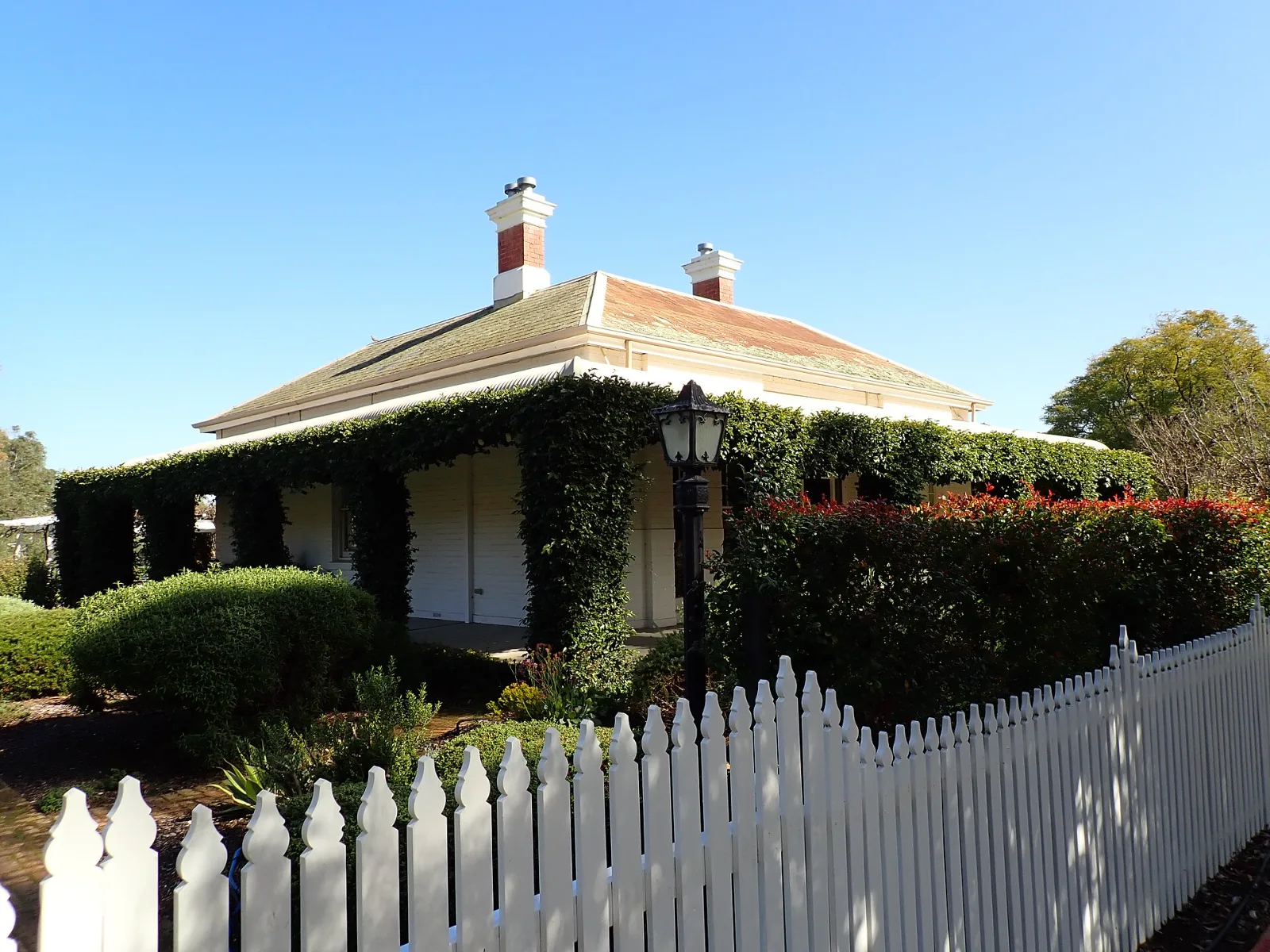
Photo credits (Wikimedia Commons): Federation-era house, Guildford: Gnangarra, CC BY 2.5 AU; Heritage house, Market Street, Guildford: Calistemon, CC BY-SA 4.0.