


What is a heritage impact statement?
An HIS assesses how a specific proposal will affect the cultural heritage significance of a place or area. The Heritage Council's guide frames every HIS around three questions:
- How will the proposed works affect the significance of the place or area?
- What measures (if any) are proposed to ameliorate any adverse impacts?
- Will the proposal result in any heritage conservation benefits that might offset any adverse impacts?
An HIS is not a history of the place, and it is not a design statement. It tests one proposal against a known statement of significance. That makes it different from a conservation management plan, which sets long-term policy for managing a place whatever is proposed.
When do you need one?
It depends on how the place is protected and what you propose.
State Register places
Under Part 5 of the Heritage Act 2018, a decision-maker considering a proposal that would, or would be likely to, affect a registered place must refer it to the Heritage Council for advice (s 73). The same applies to places under a heritage agreement with the Council and some places under a protection order (s 72). A proposal can affect a place even if it is not directly related to it (s 72(2)). Development next door can be caught.
Where a decision would adversely affect a place to a significant extent, the decision-maker's decision must be consistent with the Council's advice, unless it finds there is no feasible and prudent alternative (s 75).
The Heritage Council's Guide to developing heritage places lists an HIS, prepared by a heritage professional, among the documents for larger or complex proposals. It notes that routine maintenance and like-for-like repairs generally do not need referral.
Local heritage list places and heritage areas
Most heritage places in Perth are protected locally. The deemed provisions in the Planning and Development (Local Planning Schemes) Regulations 2015 let a local government keep a heritage list (cl 8) and designate heritage areas (cl 9). Each heritage area needs its own local planning policy. Clause 11 lets the local government require a heritage assessment before it approves development on a listed place or in a heritage area. When deciding an application, it must consider heritage conservation and the effect of the proposal on an area's cultural heritage significance (cl 67).
A local heritage survey is a record of places. It has no statutory role on its own. The heritage list is what brings a place under the scheme's heritage controls.
The Heritage Council's guide notes that many local governments encourage an HIS with any proposal affecting a heritage place. The detail expected scales with significance and impact. Partial demolition of, or an addition to, a place in the highest category of a heritage list will typically need a detailed HIS. Minor works to a place of lesser significance may not need one. Many councils set their own triggers in a heritage local planning policy, so read it first.
Aboriginal heritage is dealt with separately, under the Aboriginal Heritage Act 1972, and needs its own check.
Development Assessment Panels and the Significant Development Pathway
Since 1 March 2024, development worth more than $2 million can opt in to a Development Assessment Panel (DAP). Larger projects can use the Significant Development Pathway, decided by the Western Australian Planning Commission. The pathway changes who decides, not the heritage questions. A proposal affecting a State Register place still needs Heritage Council advice. On these projects the HIS sits beside a planning report, and the two need to tell the same story.
What the July 2026 guide asks for
The Heritage Council's Heritage Impact Statement – a guide (July 2026) is the current State guidance. It says an HIS should:
- be concise
- rest on a statement of significance, drawn from the State Register entry, the local government's inventory entry, or a conservation management plan or strategy
- include a new statement of significance if none exists or the existing one is too brief
- cite the conservation policies of an existing conservation plan directly
- address any local decision guidelines or planning policy
- reference supporting documents and attach relevant extracts, rather than repeat them
- end with a conclusion that answers the three questions.
Its template form asks for the listings, the statement of significance, aspects that respect or could harm significance, measures to minimise harm, and a conclusion.
Appendix One sets out questions by type of change. For demolition, it asks whether retention and adaptive reuse were explored. For additions, it asks whether the addition dominates the place or is sympathetic in form, proportions, design and materials. Other sections cover change of use, subdivision, adjacent development, re-roofing, services and signage.
How significance is assessed
The Heritage Act 2018 defines cultural heritage significance as "aesthetic, historic, scientific, social or spiritual value for individuals or groups within Western Australia" (s 5(1)).
For the State Register, the Heritage Council assesses places against the factors in s 38. These include historic evolution, rarity, research potential, representing a class of places, social meaning, aesthetic value, associations, and creative or technical achievement.
For local places, the Council's Guidelines for the assessment of local heritage places (2022) use the same five values plus rarity and representativeness, and rate integrity and authenticity. Places are graded from exceptional (Category 1) to little significance (Category 4).
A good HIS uses the existing assessment, then tests it on site. Fabric may have changed since listing. Where the existing statement is thin, the HIS should say so and fill the gap.
How impacts are assessed and reduced
The Heritage Council endorsed the Burra Charter (Australia ICOMOS, 2013) in 2021. Its principles shape how impact is judged in WA:
- The impact of proposed changes should be assessed with reference to the statement of significance (Article 27.1).
- Conservation takes a cautious approach of "changing as much as necessary but as little as possible" (Article 3.1).
- Change is undesirable where it reduces cultural significance (Article 15.1).
- New work should be readily identifiable as such (Article 22.2).
The Council's Development Principles for State Registered Places add practical tests: avoid irreversible change, consider siting, bulk, scale and materials, and protect views and setting.
In practice, an HIS works element by element. What is significant? What changes, and by how much? Is it reversible? Mitigation often means retaining significant fabric in place, setting an addition back from the main elevation, keeping the original roof form legible, or making an archival record before change.
Where heritage impact statements often fall short
Most weak statements share a few patterns, and each can be fixed.
- History without assessment. Pages of background, little on the works.
- Significance assumed, not tested. An old inventory entry repeated without a site check.
- Impacts in general terms. "Sympathetic" with no reference to specific fabric.
- Mitigation not on the plans. Measures the drawings do not show.
- Local policy not addressed. The guide asks for it.
- Setting overlooked. Views and neighbouring places left out.
- Advocacy instead of assessment. A balanced statement that names adverse impacts is easier for an assessing officer to rely on.
Timing: start before the design is fixed
Article 26.1 of the Burra Charter says work on a place should be preceded by studies to understand it. A significance assessment at concept stage can shape the brief, the footprint and the materials. An HIS written after the drawings are final can only describe the impacts.
For State Register places, the Heritage Council encourages owners to discuss concepts with Department of Planning, Lands and Heritage heritage officers before lodging. A draft significance assessment makes that meeting more useful.
How Trace prepares heritage impact statements
Trace Archaeology prepares heritage impact statements for owners, architects, developers and local governments. Our process follows the Heritage Council's guide:
- Confirm every listing and control that applies.
- Review the register or inventory entry and any conservation plan.
- Inspect and photograph the place, and test the statement of significance.
- Assess the drawings element by element against the Appendix One questions.
- Work with the design team on mitigation while changes are still possible.
- Write a concise HIS that closes on the three questions.
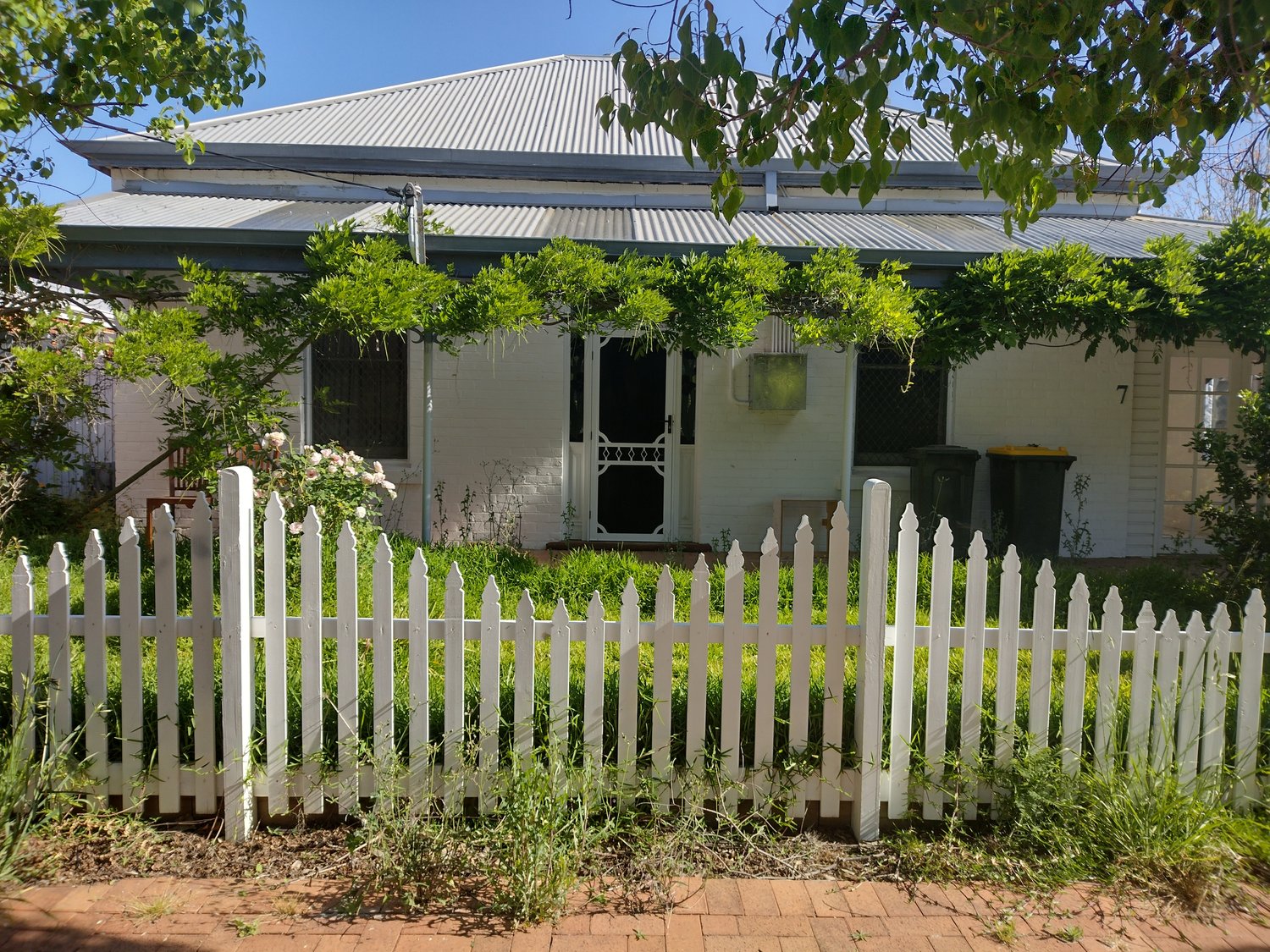
Where a development application is also needed, Trace Planning prepares it alongside the HIS so the heritage and planning cases align. For examples, see our heritage impact and character assessment for a Federation-era cottage in Guildford and our work on a State Register place in Rockingham. To discuss a proposal, contact us.
Frequently asked questions
Who can prepare a heritage impact statement?
The Heritage Council's guide does not set an accreditation. For State Register places, the Council's guidance refers to a heritage professional for larger or complex proposals, and local governments may require a heritage professional for local places. Check your council's heritage policy.
Is a heritage impact statement the same as a conservation management plan?
No. A conservation management plan sets long-term policy for a place. An HIS assesses one proposal. Where a conservation plan exists, the HIS should cite its policies.
Do minor works need a heritage impact statement?
Not always. The guide says minor works to a place of lesser significance may not need one. Your local government decides what it needs for a given application.
Does a supportive heritage impact statement mean the application will be approved?
No. The decision-maker weighs heritage alongside other planning matters. For State Register places, the Heritage Council advises on heritage only. An HIS gives the decision-maker a clear basis for its assessment. It does not decide the outcome.
References
- Heritage Council of WA / Department of Planning, Lands and Heritage, Heritage Impact Statement – a guide, July 2026. wa.gov.au
- Department of Planning, Lands and Heritage, Guidelines and technical information – heritage development and management (document collection). wa.gov.au
- Heritage Act 2018 (WA), Part 5 Div 2 (ss 71–75), s 5, s 38. legislation.wa.gov.au
- Planning and Development (Local Planning Schemes) Regulations 2015 (WA), Schedule 2 deemed provisions. Version history: legislation.wa.gov.au
- Heritage Council of WA, Guidelines for Preparing a Local Planning Policy for Local Heritage, March 2023. wa.gov.au
- Heritage Council of WA, Guide to Developing Heritage Places, July 2024. wa.gov.au
- Heritage Council of WA, Policy: Development Principles for State Registered Places (v1.1). wa.gov.au
- Heritage Council of WA, The State Register of Heritage Places: A Guide to Assessing Cultural Heritage Significance, October 2023. wa.gov.au
- Heritage Council of WA, Guidelines for the Assessment of Local Heritage Places, November 2022. wa.gov.au
- Western Australian Planning Commission, State Planning Policy 3.5 – Historic heritage conservation, May 2007. wa.gov.au
- Department of Planning, Lands and Heritage, Development Assessment Panel reforms and Significant Development Pathway. planning.wa.gov.au
- Australia ICOMOS, The Burra Charter: The Australia ICOMOS Charter for Places of Cultural Significance, 2013. australia.icomos.org



.JPG)