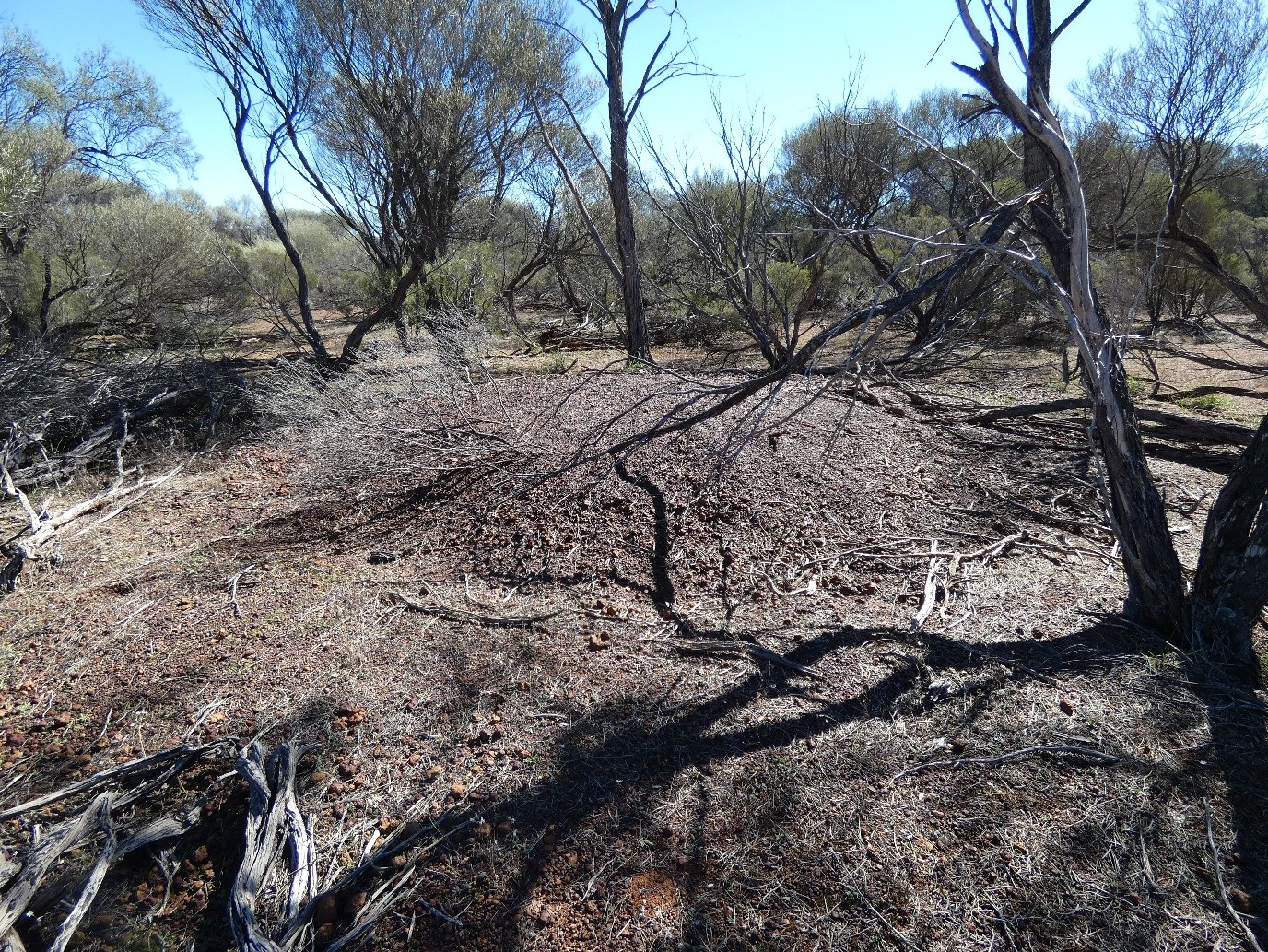
Egg-leaver is also very literal, as it happens. The malleefowl is a megapode, one of a group of large, ground dwelling birds who don’t sit on their eggs. Instead, they bury them, in large mounds full of vegetation. As the plant material rots, it generates heat and when the eggs eventually hatch, the baby malleefowl dig themselves out, and are immediately on their own – they never interact with an adult. Parents of the year, these birds are not. Baby malleefowl are immediately self-sufficient, able to run, shelter and feed themselves, something known as superprecocialty. They’re even able to fly within 24 hours of hatching.
These incubation mounds are what malleefowl are most famous for – they’re tremendous structures, up to 5m in diameter and a meter high. They’re typically one of the major signs that malleefowl exist in an area – living birds are rarely seen, but their feats of earthworking are large and obvious indicators that they’re lurking somewhere in the scrub.
The malleefowl is listed as Vulnerable, both Federally and in Western Australia. Its range and population have plummeted since European settlement. Consequently, any development activity in areas likely contain malleefowl require fauna surveys to determine if they are in fact present.
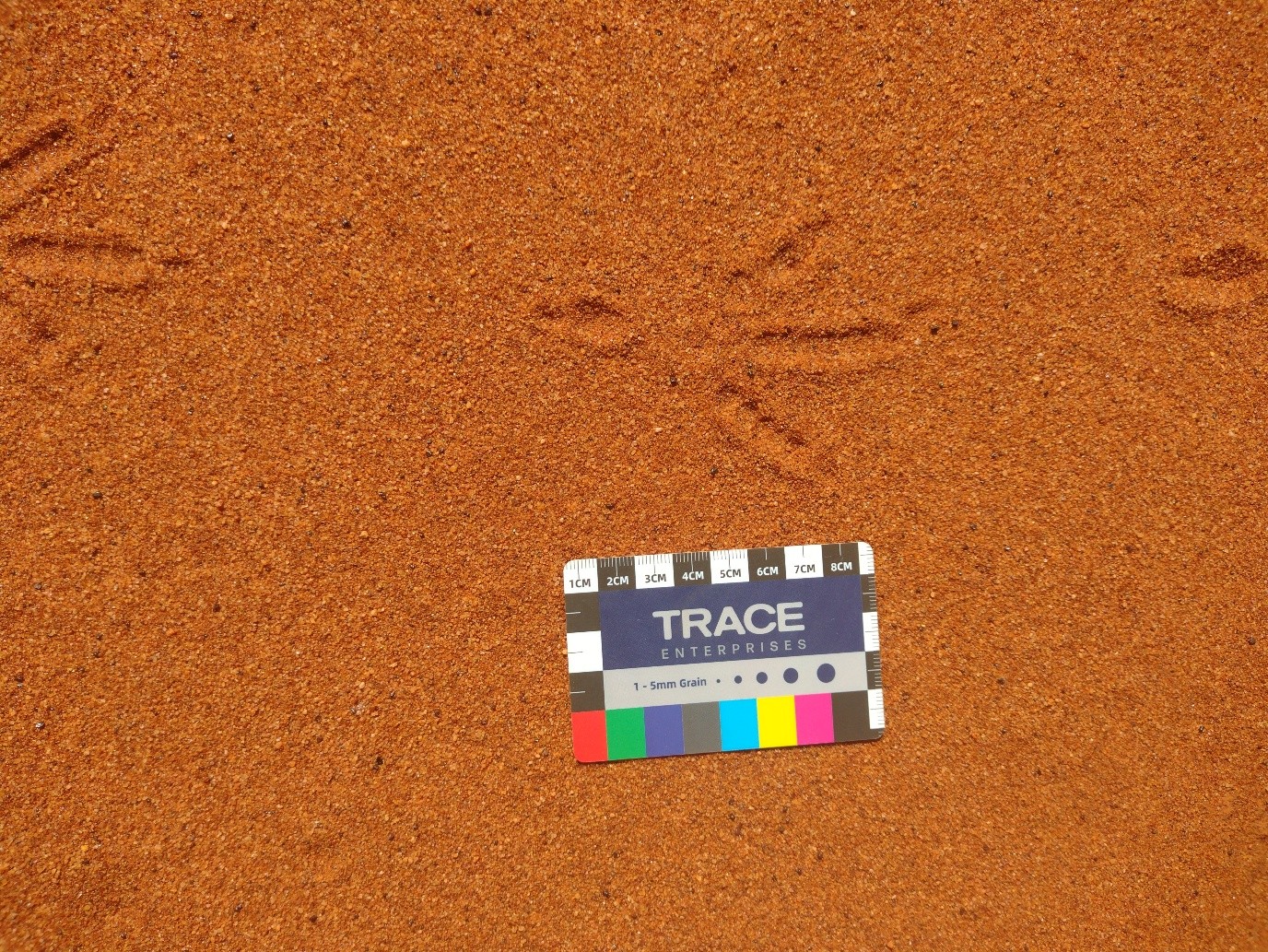
Malleefowl surveys primarily focus on secondary signs – the large, distinct incubation mounds, and tracks. Being primarily ground dwelling birds, malleefowl leave copious tracks throughout their territory, and they’re large and distinctive. In fact, the only species of bird with a similar size footprint in WA is the Australian bustard (Ardeotis australis), and it lacks the distinctive backwards facing toe that the malleefowl demonstrates in its tracks.
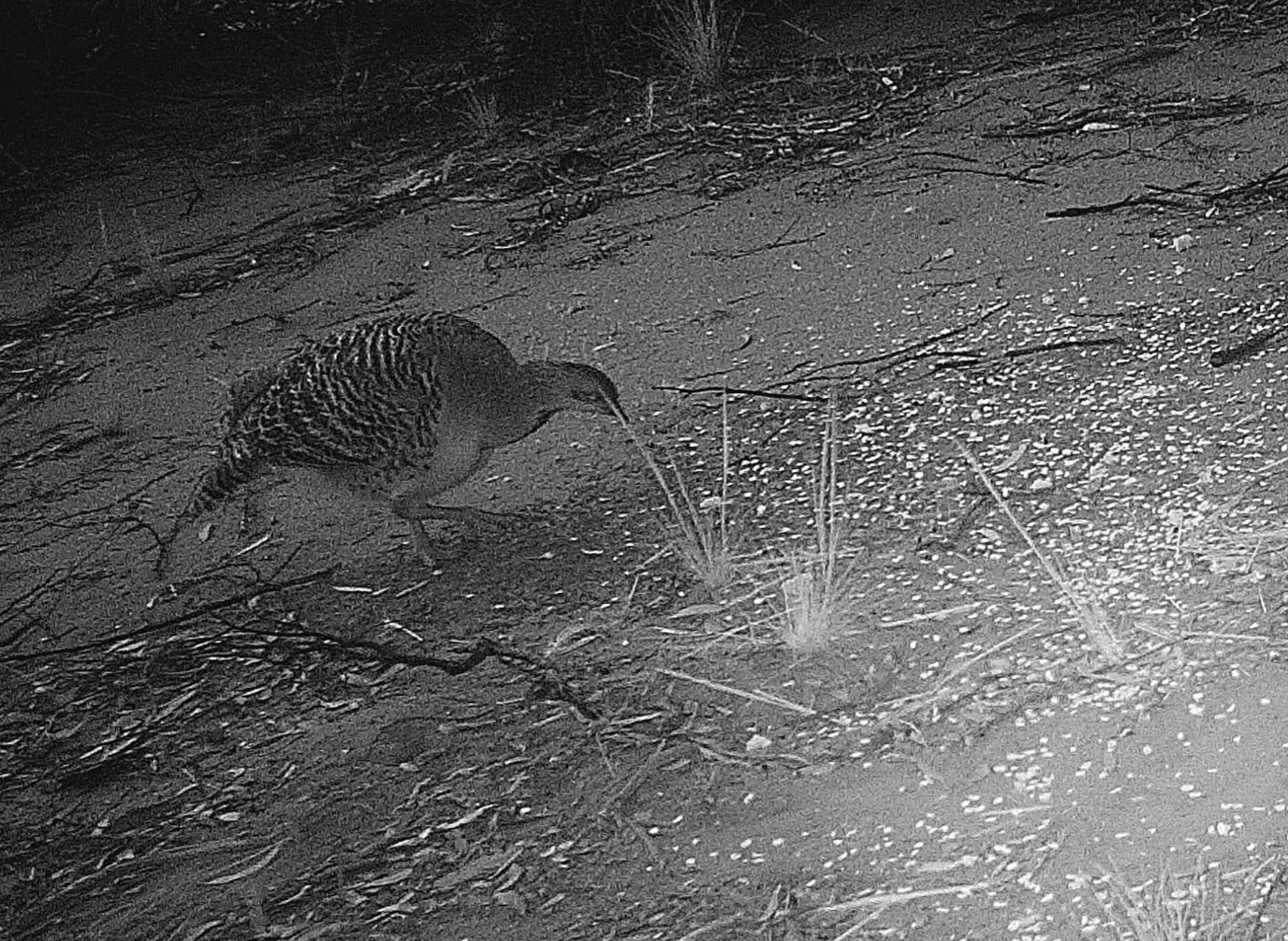
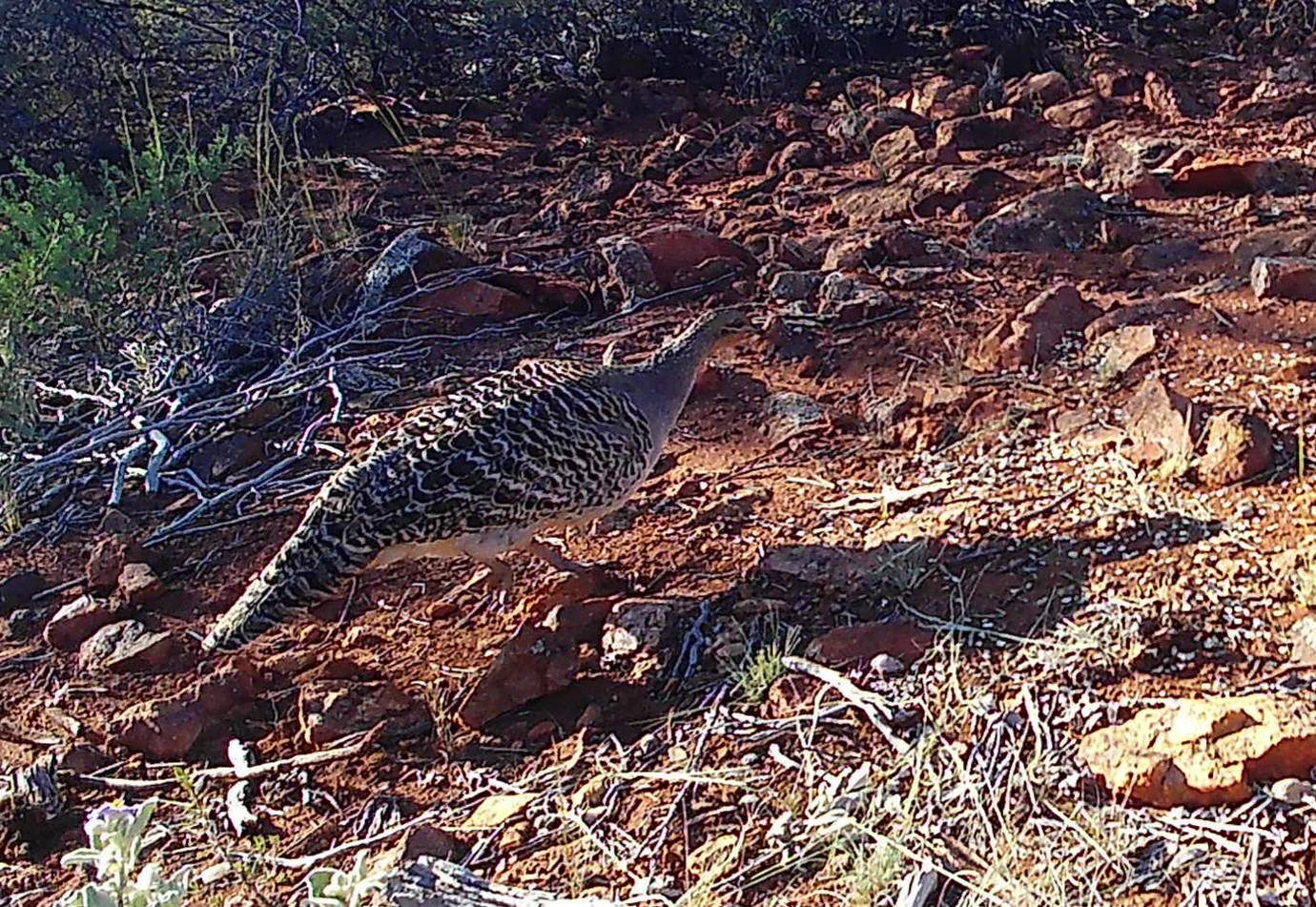
Motion cameras are increasingly becoming part of malleefowl surveys – they’re responsible for the imagery of birds seen here - and LiDAR is revolutionising mound searches, enabling large areas to be quickly preliminary surveyed, with a much smaller commitment required for ground truthing the results of the LiDAR survey.
References
National Recovery Plan for the Malleefowl (Leipoa ocellata)
Merriam-Webster


.JPG)