A unique group of birds
Cockatoos are an ancient lineage that diverged from other parrots around 41 million years ago, back in the era of Gondwana. WA's three threatened black cockatoos are large, long-lived birds with strong pair bonds — they likely mate for life — and they nest almost exclusively in hollows found in mature trees. That makes the availability of old-growth trees with suitable hollows a critical factor in their long-term survival.
These birds are also granivores with a remarkable evolutionary story. They rely on hard-shelled fruits from eucalypts, banksias, and hakeas, cracked open with an immense, specialised bill. Over millions of years, southwestern WA's plants evolved tougher, woodier fruit (and, in some cases, spiny leaves) to deter feeding — and the cockatoos evolved stronger, larger bills in response. It's a textbook case of co-evolution, playing out in real time in the forests and heathlands of the south-west.
Meet the three threatened species
Australia has five species of black cockatoo, found nowhere else in the world. Three live in WA:
- Carnaby's black cockatoo (Zanda latirostris) and Baudin's black cockatoo (Z.baudinii) — both restricted to the forests of south-west WA.
- Red-tailed black cockatoo (Calyptorhynchus banksii) — more widespread across Australia, with several recognised subspecies. Of the three subspecies found in WA, the Forest red-tailed black cockatoo (C. banksii naso) is confined to the south-west forests.
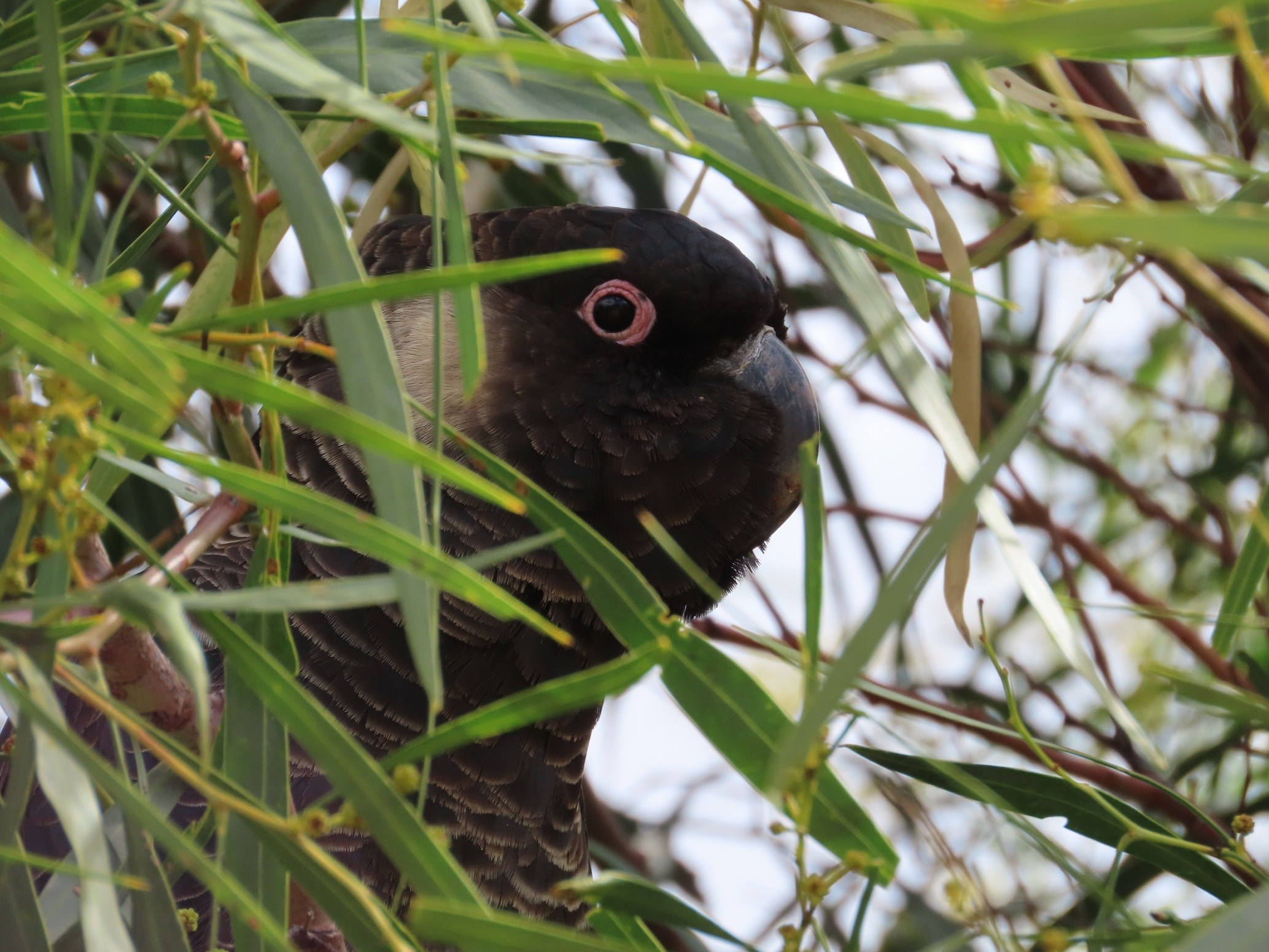
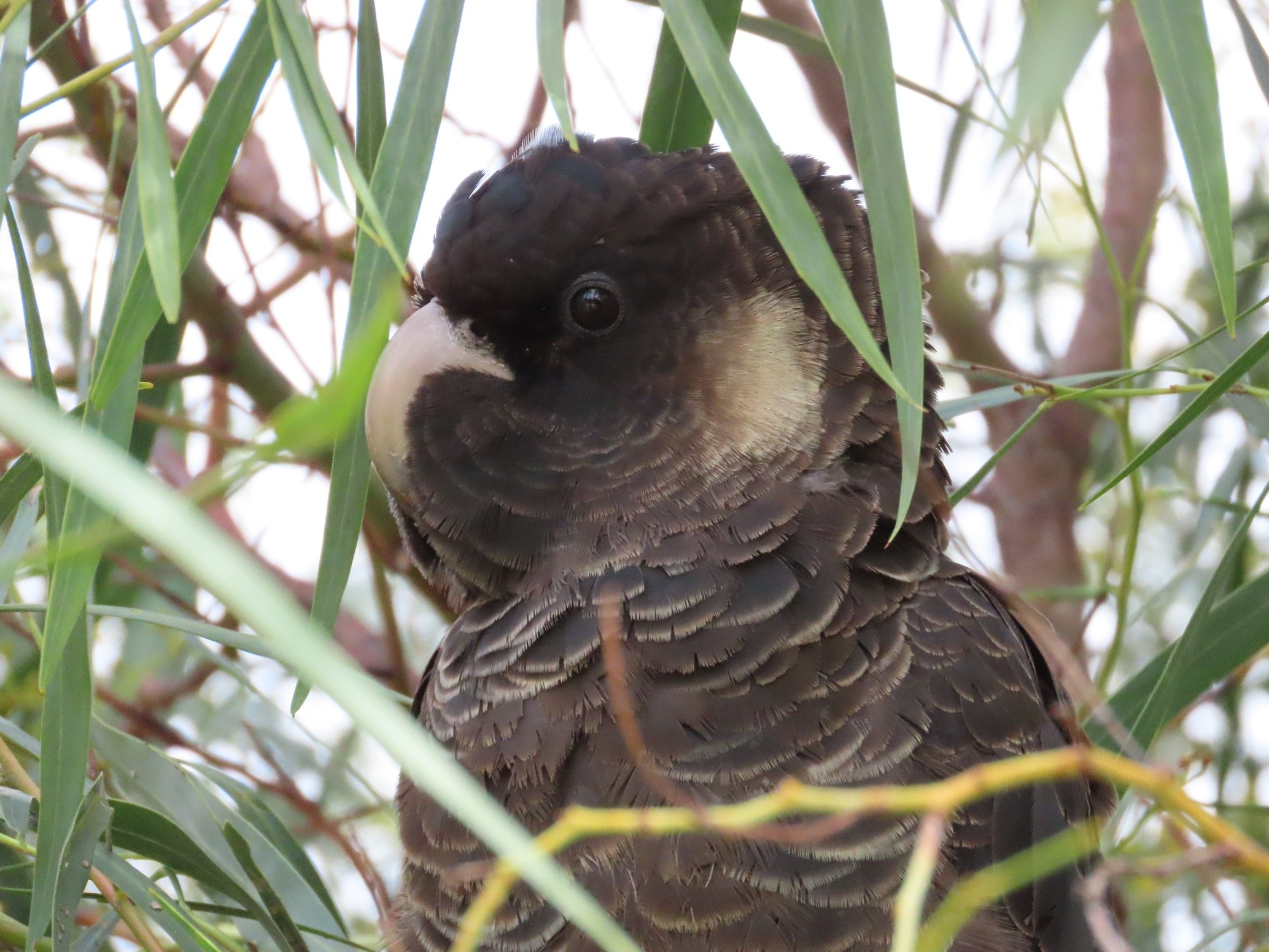
Carnaby's black cockatoo is listed as Endangered under both the EPBC Act and WA's BC Act (and Endangered on the IUCN Red List). It's identified by white tail panels and ear coverts, and a relatively short, wide bill. It occupies Proteaceous scrub, heath, adjacent eucalypt woodland, and pine plantations across the south-west, with an estimated population of around 34,000. It's easily confused with Baudin's cockatoo, though their core habitats and breeding ranges don't overlap.
Baudin's black cockatoo is also listed as Endangered under the EPBC Act and BC Act, but is Critically Endangered on the IUCN Red List — the most at-risk of the three species, with an estimated population of just 3,250. It looks very similar to Carnaby's cockatoo but has a narrower, more elongated bill, and is confined to eucalypt forests in the humid and sub-humid south-west.
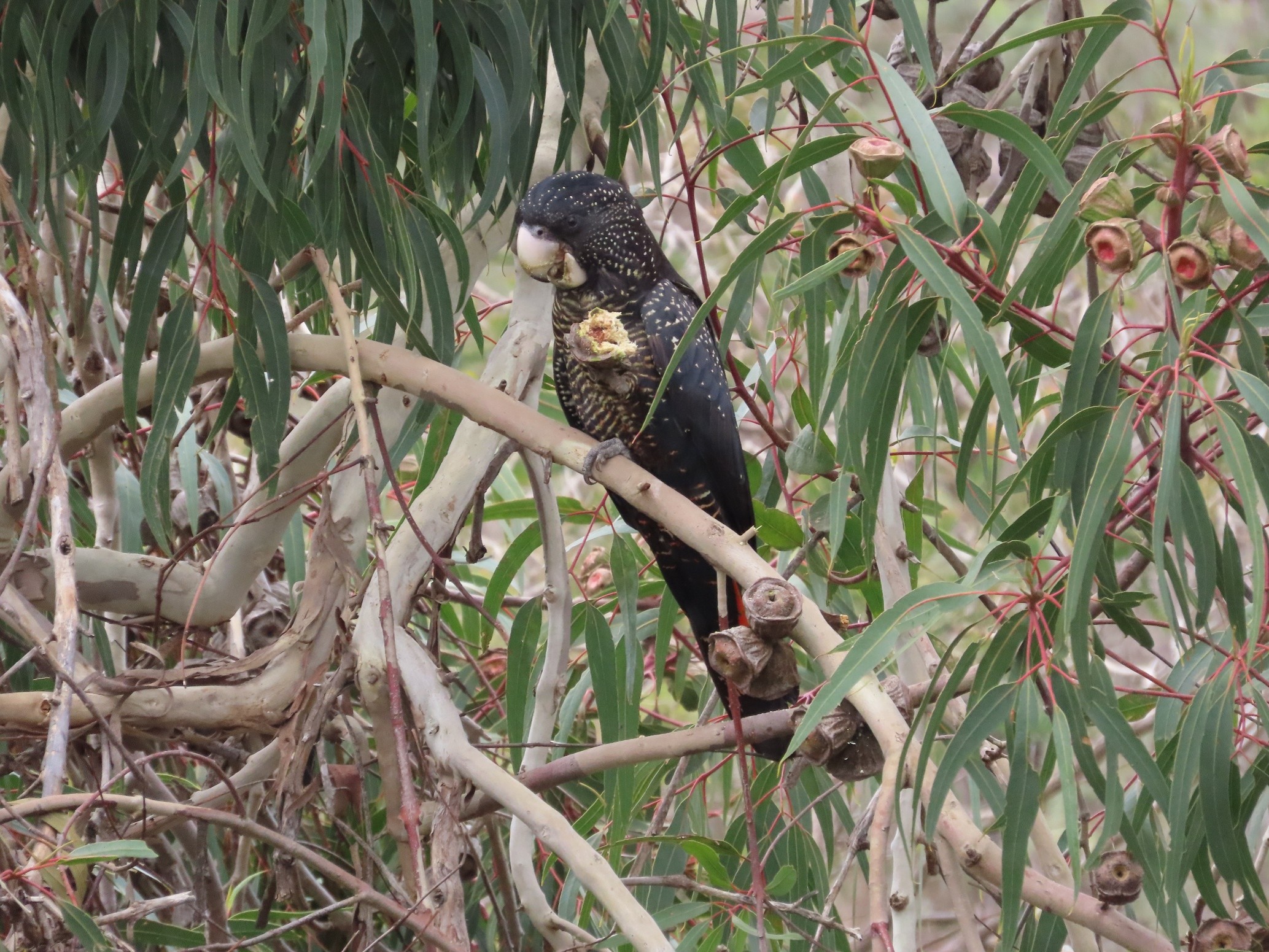
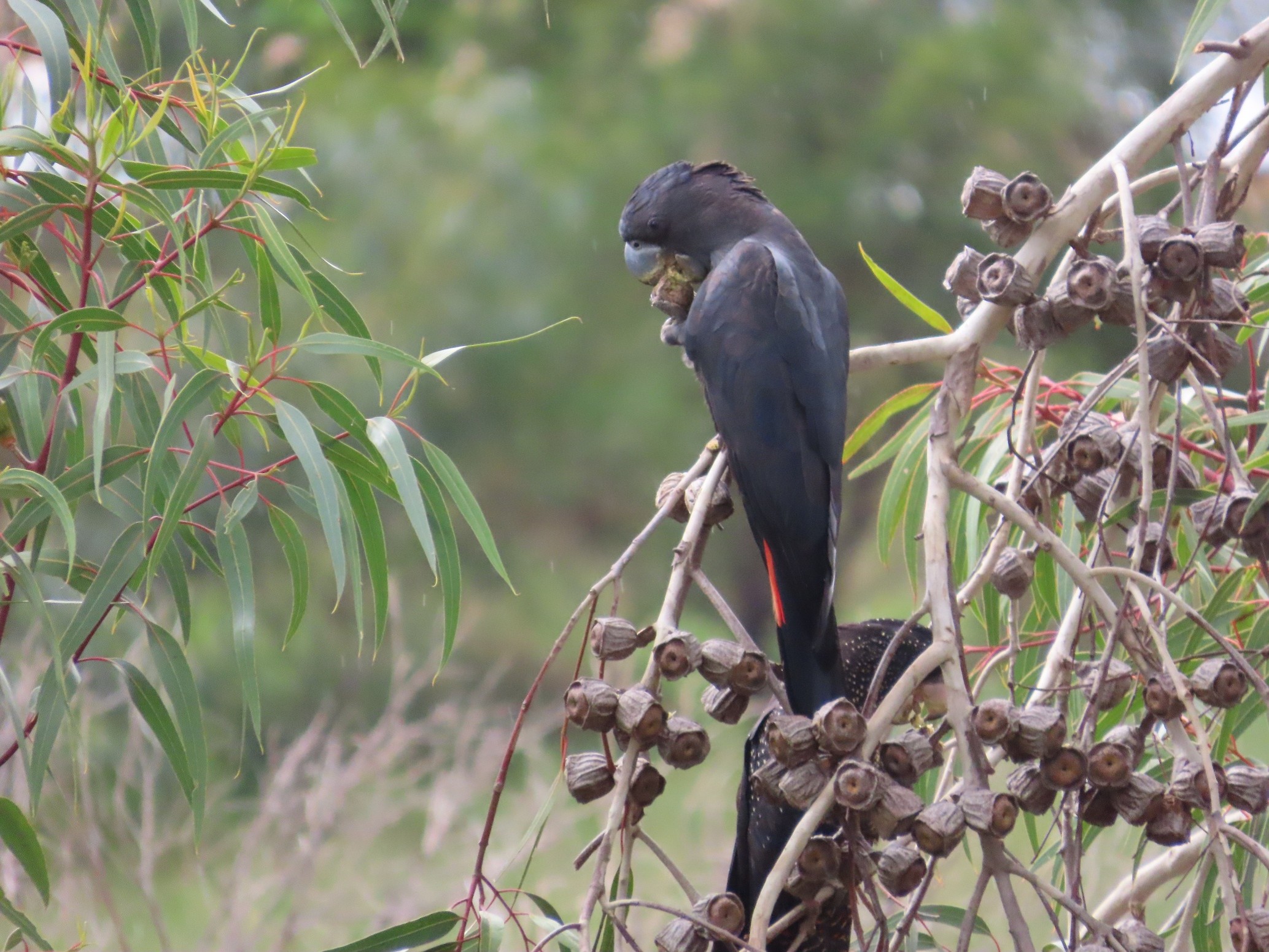
The Forest red-tailed black cockatoo is listed as Vulnerable under both the EPBC Act and BC Act (it hasn't yet been assessed by the IUCN). It's a large, mostly black bird, easily recognised by its bright red or yellow-orange tail panels and a prominent, rounded, helmet-like crest. Like Baudin's cockatoo, it's confined to eucalypt forests in the humid and sub-humid south-west, with an estimated population of around 15,000.
Reversing the extinction risk
Habitat loss from residential, industrial, and agricultural development is the primary driver pushing these birds toward extinction. Protecting sufficient breeding, foraging, and roosting habitat — and maintaining connectivity between these habitats — is essential to their long-term survival.
It's also the law. Destroying critical black cockatoo habitat or directly harming the birds is prohibited, with penalties that can include substantial fines and imprisonment. Any proposed development needs to properly assess potential critical habitat on site, and take steps to avoid, minimise, or mitigate impacts on threatened black cockatoos.
Before you start land clearing
If your project site falls within the range of a threatened black cockatoo species, a habitat assessment is required. These assessments — which must be carried out by qualified, trained consultants — typically involve a desktop review followed by a field assessment to locate and quantify roosting, foraging, or breeding habitat, guided by:
- The Referral Guideline for 3 WA Threatened Black Cockatoo Species (DAWE, 2022).
- The Matters of National Environmental Significance — Significant Impact Guidelines 1.1 (DoE, 2013).
If your proposed works are likely to have a significant impact on threatened black cockatoos or their critical habitat, you'll likely need to refer the action to the Minister for the Environment.
Southwestern WA is the only place on Earth these three species exist. If we lose them here, they're gone everywhere. Protecting them isn't just a compliance requirement — it's a responsibility to future generations.
Get in touch with our team to find out how we can support your project with a black cockatoo habitat assessment.
References
DAWE. (2022). Referral guideline for 3 WA threatened black cockatoo species: Carnaby's Cockatoo, Baudin's Cockatoo and the Forest Red-tailed Black cockatoo. Department of Agriculture, Water and the Environment, Canberra.
DoE. (2013). Matters of National Environmental Significance — Significant Impact Guidelines 1.1, EPBC Act 1999. Department of the Environment, Canberra.
Ewart, K.M., Lo, N., Ogden, R. et al. (2020). Phylogeography of the iconic Australian red-tailed black-cockatoo (Calyptorhynchus banksii) and implications for its conservation. Heredity, 125, 85–100. https://doi.org/10.1038/s41437-020-0315-y
Groom, P.K., Lamont, B.B. (2015). Chapter 11: Seed Storage, Germination and Establishment. In Plant Life of Southwestern Australia: Adaptations for Survival. DeGruyter Open Ltd, Warsaw/Berlin.
IUCN. (2025). The IUCN Red List of Threatened Species. Version 2025-2. https://www.iucnredlist.org
Johnstone, R.E., Storr, G.M. (2004). Handbook of Western Australian Birds: Volume II — Passerines (blue-winged pitta to goldfinch). Western Australian Museum.
White, N.E., Phillips, M.J., Gilbert, M.T.P. et al. (2011). The evolutionary history of cockatoos (Aves: Psittaciformes: Cacatuidae). Molecular Phylogenetics and Evolution, 59, 615–622. https://doi.org/10.1016/j.ympev.2011.03.011

.JPG)