
The main amending law is the Environment Protection Reform Act 2025 (No. 68, 2025), which received Royal Assent on 1 December 2025. It works alongside related Acts, including the National Environmental Protection Agency Act 2025 and the Environment Protection and Biodiversity Conservation (Restoration Charge Imposition) Act 2025. This article focuses on the parts most relevant to projects that may need a referral under the EPBC Act.
How the reforms are commencing
Section 2 of the Reform Act sets out when each part starts. Most of the changes in Schedule 1, Parts 1 and 2 start on a day or days fixed by proclamation. Any of those provisions that have not started within 12 months of Royal Assent start on the day after that period ends, which is 1 December 2026.
Two commencement proclamations have been made so far, fixing 20 February 2026 and 24 August 2026. The table below sets out the key dates, and shows that the new approval tests are the main change still to come.
| Date | What started or starts | Source |
|---|---|---|
| 1 December 2025 | Environment Protection Reform Act 2025 receives Royal Assent; sections 1 to 3 commence | Reform Act, s 2 [1] |
| 2 December 2025 | Schedule 1, items 116A and 571, the Schedule 1A amendments and the application and transitional provisions in Schedule 1, Part 3 | Reform Act, s 2 [1] |
| 20 February 2026 | First group of Schedule 1 items, including new definitions such as national environmental standard and national interest exemption | Proclamation No. 1 [2] |
| 1 July 2026 | National Environmental Protection Agency Act 2025, and Schedule 2 (Parts 1 and 3) and Schedule 3 of the Reform Act | Reform Act, s 2 [1]; EPBC Act versions [4] |
| 21 August 2026 | Standards for Matters of National Environmental Significance, and for Data and Information | Standards, s 2 [5] [8] |
| 22 August 2026 | Standards for Environmental Offsets, and for Community Engagement | Standards, s 2 [6] [7] |
| 24 August 2026 | Second group of Schedule 1 items, including definitions of unacceptable impacts, residual significant impact and passes the net gain test | Proclamation No. 2 [3]; EPBC Act versions [4] |
| 1 December 2026 (latest) | Any provisions of Schedule 1, Parts 1 and 2 not already commenced, including the new approval tests | Reform Act, s 2 [1]; National EPA [10] |
The National Environmental Protection Agency (National EPA) news item on this next tranche of reforms lists stronger enforcement powers, environment protection orders, expanded audit powers and higher penalties for the most serious breaches among the changes that commenced. The penalty amounts that apply are those in the current compilation of the EPBC Act.
The National Environmental Standards
The Minister for the Environment and Water made the first four National Environmental Standards on 19 August 2026, under section 514YD of the EPBC Act:
- National Environmental Standard (Matters of National Environmental Significance) 2026
- National Environmental Standard (Environmental Offsets) 2026
- National Environmental Standard (Community Engagement) 2026
- National Environmental Standard (Data and Information) 2026
Each Standard commenced the day after it was registered. The National EPA states that the Standards will not apply to assessments and approval decisions until the new approval tests commence, on or before 1 December 2026.
For approvals under Parts 9 and 10 of the Act, the MNES Standard says its principles apply only to the extent that the impact is on a protected matter that is a controlling provision for the action. Controlling provisions are provisions of Part 3 of the Act, which include the provisions protecting listed threatened species and ecological communities.
The mitigation hierarchy
The MNES Standard requires an action to be designed having regard to a four step mitigation hierarchy. A note to the Standard says this will generally require ongoing consideration of the hierarchy throughout the design process, not only at the end.
| Step | What the Standard requires |
|---|---|
| 1. Avoid | All reasonably practicable measures must be taken to avoid significant impacts on a protected matter through the design of the action. |
| 2. Mitigate | Where a significant impact cannot be avoided, it must be reduced through all reasonably practicable measures, where possible below the level of significance. |
| 3. Repair | Where repair is viable, damage must be repaired to as close as possible to the impact site baseline. Repair is only viable if the damage is temporary and short term, repair can be completed in a timeframe relevant to the protected matter, it will reduce the impact, and it is feasible in the long term. |
| 4. Offset | Any residual significant impact must be compensated by an offset activity, a restoration contribution charge, a bioregional plan restoration contribution, or a combination of these. |
In short, offsets and other compensation come last, after avoidance, mitigation and repair have been reasonably exhausted. The Standard also states that all residual significant impacts to protected matters must be compensated, unless the impact is an unacceptable impact or affects a protected matter prescribed by regulations under subsection 134(3AC) of the Act.
Offsets and the net gain test
The Environmental Offsets Standard sets the rules for offset activities. Its objective is to deliver the required net gain, which it defines by reference to the net gain for the affected protected matter within the meaning of section 527K of the Act. One of its outcomes is that offset activities provide a measurable improvement to the affected protected matter that is equal to or greater than the required net gain.
The Standard sets out eight principles that an offset activity must meet:
- feasibility
- security
- tangible
- measurable improvements
- additionality
- like for like
- relevant area
- offset commenced prior to impact.
Under the Standard, an offset activity does not include paying a restoration contribution charge. The charge is a separate option. It is imposed under the Environment Protection and Biodiversity Conservation (Restoration Charge Imposition) Act 2025 on the grant of approvals, and the MNES Standard lists it, with offset activities and bioregional plan restoration contributions, as a way to compensate for a residual significant impact.
Unacceptable impacts
From 24 August 2026, the EPBC Act includes a definition of unacceptable impacts. A note to the MNES Standard says that an unacceptable impact on a protected matter cannot be compensated by an offset activity or a restoration contribution charge, except in limited circumstances where the action is a national interest proposal.
The MNES Standard also states that an action that will have, or is likely to have, a residual significant impact on a protected matter prescribed in regulations made for subsection 134(3AC) of the Act cannot be approved.
Referrals already in the system
The application and transitional provisions are in Schedule 1, Part 3 of the Reform Act, which commenced on 2 December 2025. Transitional rules have also been made for the July and August 2026 commencements.
How the new approval tests apply to a particular referral depends on those provisions and on where the referral sits in the process. Each project should be checked against the transitional provisions and current guidance from the Department of Climate Change, Energy, the Environment and Water (DCCEEW) and the National EPA, with legal advice where needed.
The WA picture
The current assessment bilateral agreement between the Commonwealth and Western Australia commenced on 1 January 2015. Under it, the State assesses proposed actions on behalf of the Australian Government to reduce duplication. The National EPA notes that a 2016 change to WA environmental impact assessment procedures means the original agreement no longer applies to some proposals.
On 21 April 2026, the Commonwealth and Western Australian governments signed a memorandum of understanding on bilateral agreements. It commits to developing an assessment bilateral agreement by December 2026, with work on an approval bilateral agreement to follow once the assessment agreement is in place.
An assessment bilateral agreement is about assessment, not approval. Under the current arrangement, the Commonwealth Minister uses the State assessment report to inform the Commonwealth approval decision.
What to check now
- Work out where each current or planned referral sits in the process, and whether a decision is likely before or after the new approval tests commence.
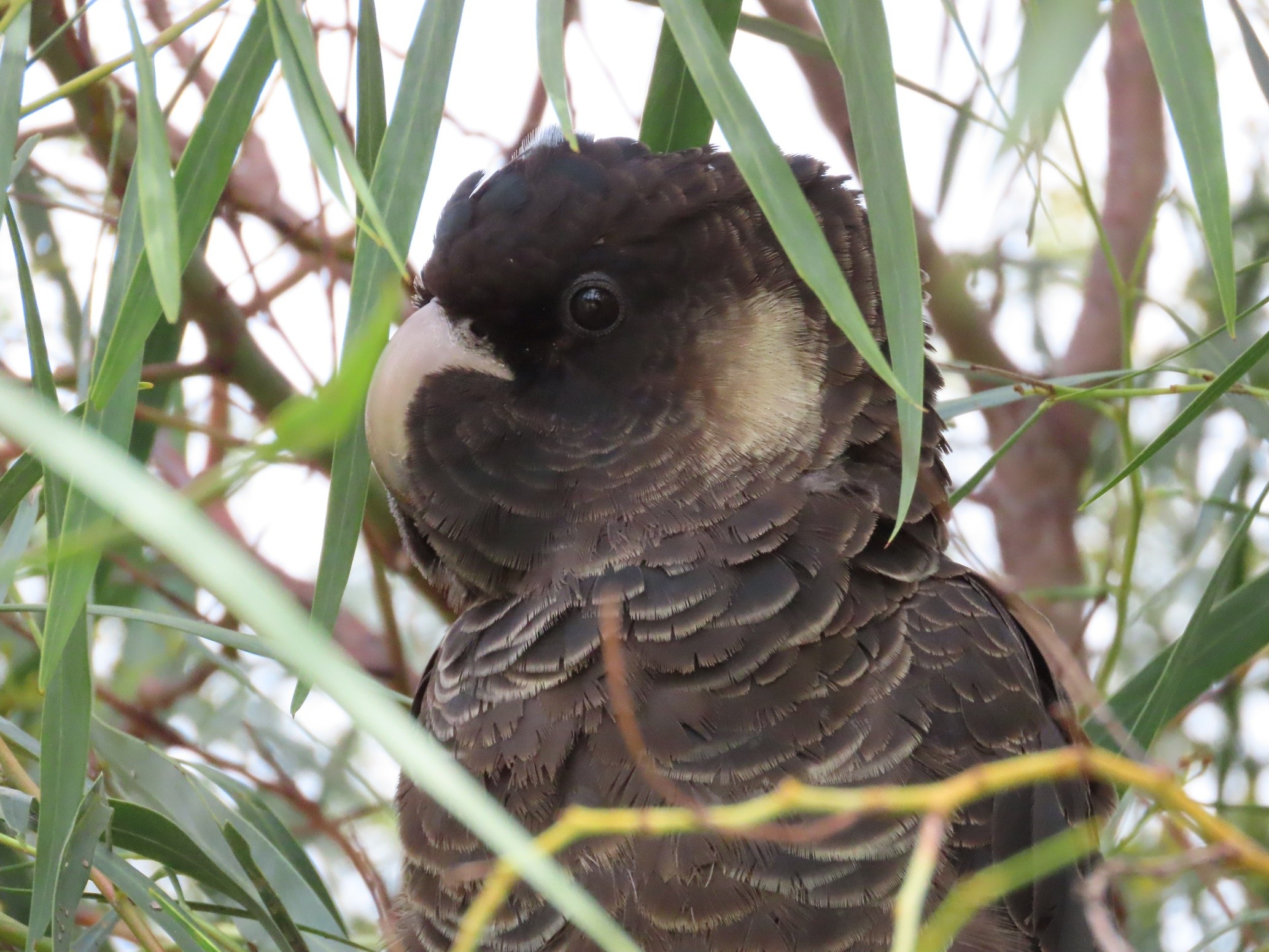
- Check that survey data for listed species and ecological communities is current and follows the relevant Commonwealth survey guidelines, including the 2022 DCCEEW referral guideline for the three threatened WA black cockatoo species.
- Record how avoidance, mitigation and repair have been considered through project design, in line with the MNES Standard.
- If residual significant impacts are likely, start offset scoping early. The Offsets Standard includes a principle that offsets commence prior to impact.
- Check whether the project will need to provide greenhouse gas information. The National EPA lists regulations explaining which projects will need to disclose Scope 1 and Scope 2 greenhouse gas emissions during assessments once the new tests commence.
How Trace Ecology helps
Trace Ecology carries out flora and fauna surveys, threatened species assessments and environmental impact assessments in Western Australia and the Northern Territory. We can help prepare the ecological information that supports an EPBC referral, including black cockatoo habitat assessments and the survey and impact information needed for environmental impact assessments.
You can read more about our environmental services, or contact our environmental team to talk about a project.
Frequently asked questions
When do the new EPBC approval tests start?
Under section 2 of the Environment Protection Reform Act 2025, any provisions of Schedule 1, Parts 1 and 2 that have not started by proclamation commence on 1 December 2026. The National EPA states that the new approval tests commence on or before that date.
Do the National Environmental Standards apply to EPBC referrals now?
The four Standards commenced on 21 and 22 August 2026. The National EPA states that they will not apply to assessments and approval decisions until the new approval tests commence. How they apply to a referral already lodged depends on the transitional provisions.
Does the WA bilateral agreement mean only one environmental approval is needed?
No. The current WA agreement is an assessment bilateral agreement. The State assesses the proposal, and the Commonwealth Minister uses the State assessment report to inform the Commonwealth approval decision. The April 2026 memorandum of understanding sets an ambition for an approval bilateral agreement after a new assessment agreement is in place.
This article is general information as at October 2026, not legal advice.
References
All accessed 20 October 2026.
- Environment Protection Reform Act 2025 (No. 68, 2025), as made, assented to 1 December 2025, section 2 (Commencement). https://www.legislation.gov.au/C2025A00068/asmade/text
- Environment Protection Reform Commencement Proclamation (No. 1) 2026 (F2026N00133), signed 19 February 2026. https://www.legislation.gov.au/F2026N00133/asmade/text
- Environment Protection Reform Commencement Proclamation (No. 2) 2026 (F2026N00614), signed 20 August 2026. https://www.legislation.gov.au/F2026N00614/asmade/text
- Environment Protection and Biodiversity Conservation Act 1999, version history (Compilation No. 70, C2026C00369, in force from 24 August 2026). https://www.legislation.gov.au/C2004A00485/latest/versions
- National Environmental Standard (Matters of National Environmental Significance) 2026 (F2026L01094), made 19 August 2026. https://www.legislation.gov.au/F2026L01094/asmade/text
- National Environmental Standard (Environmental Offsets) 2026 (F2026L01093), made 19 August 2026. https://www.legislation.gov.au/F2026L01093/asmade/text
- National Environmental Standard (Community Engagement) 2026 (F2026L01091), made 19 August 2026. https://www.legislation.gov.au/F2026L01091/asmade
- National Environmental Standard (Data and Information) 2026 (F2026L01092), made 19 August 2026. https://www.legislation.gov.au/F2026L01092/asmade
- Environment Protection and Biodiversity Conservation (Restoration Charge Imposition) Act 2025 (No. 67, 2025), as made. https://www.legislation.gov.au/C2025A00067/asmade
- National Environmental Protection Agency, Next tranche of environment protection reforms and National Environmental Standards (2026). https://www.nationalepa.gov.au/node/464
- Environment Protection Reform (July Commencements) Transitional Rules 2026 (F2026L00838), registered 26 June 2026. https://www.legislation.gov.au/F2026L00838/asmade
- Environment Protection Reform (August Commencements) Transitional Rules 2026 (F2026L01106), registered 21 August 2026. https://www.legislation.gov.au/F2026L01106/asmade
- National Environmental Protection Agency, Western Australia bilateral agreement for environmental assessments. https://www.nationalepa.gov.au/node/78
- Memorandum of Understanding between the Commonwealth of Australia and Western Australia on bilateral environmental assessment and approvals (signed 21 April 2026). https://www.nationalepa.gov.au/sites/default/files/documents/memorandum-understanding-comm-wa-governments.pdf
- DCCEEW, Referral guideline for 3 WA threatened black cockatoo species: Carnaby's Cockatoo, Baudin's Cockatoo and the Forest Red-tailed Black-cockatoo (2022, revising the 2012 guideline). https://www.dcceew.gov.au/environment/epbc/publications/referral-guideline-3-wa-threatened-black-cockatoo-species-2022