
Aboriginal Heritage Due Diligence: an overview
Know what’s there before you break ground.
A due diligence and desktop assessment is the essential first step in any project that intersects with Aboriginal cultural heritage in Western Australia. Before a heritage survey is commissioned, before a Section 18 application is lodged, and before any ground-disturbing activity begins, a thorough desktop assessment establishes what is already known about the cultural heritage values of a project area, and what further investigation may be required.
What is involved
Trace Archaeology conducts due diligence and desktop assessments for developers, miners, exploration companies, infrastructure builders and government agencies across WA and the NT. Our assessments provide clients with a clear, evidence-based picture of the heritage risk profile of their project area, giving them the information they need to plan their heritage programme effectively, budget accurately and avoid the costly surprises that come from inadequate upfront research.
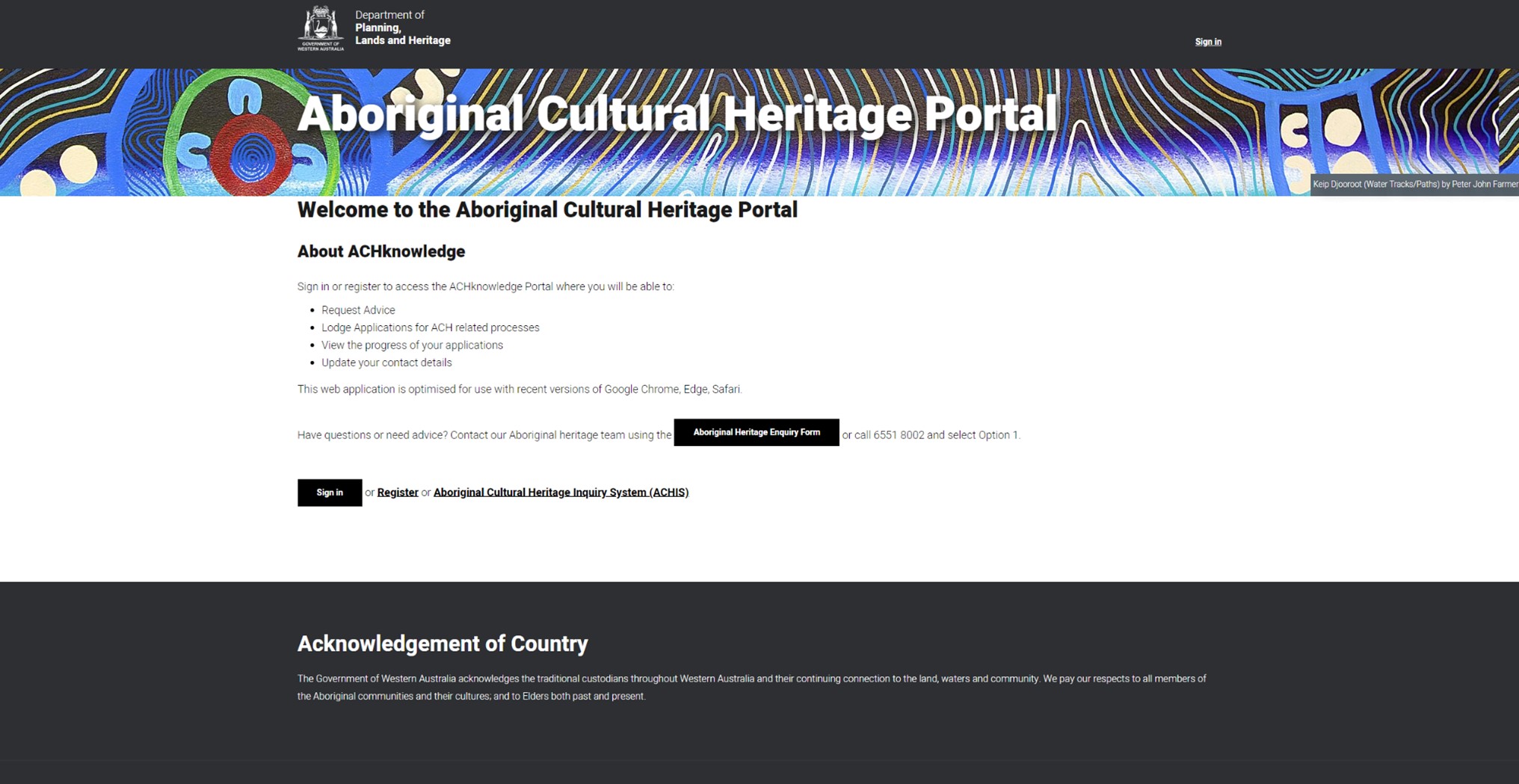
Our desktop assessments begin with a comprehensive search of the Aboriginal Cultural Heritage Inquiry System (ACHIS), the DPLH database of known Aboriginal sites and places recorded under the Aboriginal Heritage Act 1972. We identify all registered sites within and adjacent to the project area, review site records and spatial data, and assess the potential for unrecorded heritage in the surrounding landscape based on environmental indicators, landform characteristics and the known archaeological record for the bioregion.
We review all relevant spatial data, including cadastral boundaries, existing survey coverage, Native Title determinations, Indigenous Land Use Agreements and any previous heritage reports or survey results available for the project area. We assess the project's activities and footprint against the known heritage record to identify areas of potential conflict and recommend appropriate survey methodologies to address any identified risks.
Our desktop assessment reports are structured to meet the requirements of the DPLH and to provide a clear and defensible record of the due diligence steps taken. They are written to be practically useful, telling you not just what is known, but what it means for your project and what you need to do next.
Aboriginal Heritage Due Diligence in the field


Across the Pilbara, Kimberley, Goldfields, Southwest and Northern Territory, Trace Archaeology's desktop assessments have helped developers, miners and explorers understand the heritage landscape of their project areas and plan their heritage programmes with confidence.
Trace Archaeology is a division of Trace Enterprises, which brings heritage, environmental and planning specialists together under one roof.
Buying or planning a site? Pair this with planning due diligence and a flora and fauna assessment, so heritage, environmental and planning risks are checked together.
More Aboriginal Archaeology & Anthropology services
Know what’s there before you break ground.
A due diligence and desktop assessment is the essential first step in any project that intersects with Aboriginal cultural heritage in Western Australia. Before a heritage survey is commissioned, before a Section 18 application is lodged, and before any ground-disturbing activity begins, a thorough desktop assessment establishes what is already known about the cultural heritage values of a project area, and what further investigation may be required.
Trace Archaeology conducts due diligence and desktop assessments for developers, miners, exploration companies, infrastructure builders and government agencies across WA and the NT. Our assessments provide clients with a clear, evidence-based picture of the heritage risk profile of their project area, giving them the information they need to plan their heritage programme effectively, budget accurately and avoid the costly surprises that come from inadequate upfront research.
Our desktop assessments begin with a comprehensive search of the Aboriginal Cultural Heritage Inquiry System (ACHIS), the DPLH database of known Aboriginal sites and places recorded under the Aboriginal Heritage Act 1972. We identify all registered sites within and adjacent to the project area, review site records and spatial data, and assess the potential for unrecorded heritage in the surrounding landscape based on environmental indicators, landform characteristics and the known archaeological record for the bioregion.
We review all relevant spatial data, including cadastral boundaries, existing survey coverage, Native Title determinations, Indigenous Land Use Agreements and any previous heritage reports or survey results available for the project area. We assess the project's activities and footprint against the known heritage record to identify areas of potential conflict and recommend appropriate survey methodologies to address any identified risks.
Our desktop assessment reports are structured to meet the requirements of the DPLH and to provide a clear and defensible record of the due diligence steps taken. They are written to be practically useful, telling you not just what is known, but what it means for your project and what you need to do next.
Across the Pilbara, Kimberley, Goldfields, Southwest and Northern Territory, Trace Archaeology's desktop assessments have helped developers, miners and explorers understand the heritage landscape of their project areas and plan their heritage programmes with confidence.
Trace Archaeology is a division of Trace Enterprises, which brings heritage, environmental and planning specialists together under one roof.
Buying or planning a site? Pair this with planning due diligence and a flora and fauna assessment, so heritage, environmental and planning risks are checked together.
Explore our other services
All heritage services →
All environmental services →
All planning services →
Every heritage, environmental and planning project starts with the right conversation.
Tell us what you are planning and where. We'll tell you what assessments and approvals it needs, who should be involved and what happens next.