
Underwater Aboriginal sites off Murujuga
Two underwater Aboriginal archaeological sites have been recorded off Murujuga in the Pilbara, drowned by rising seas at least 9,000 years ago.
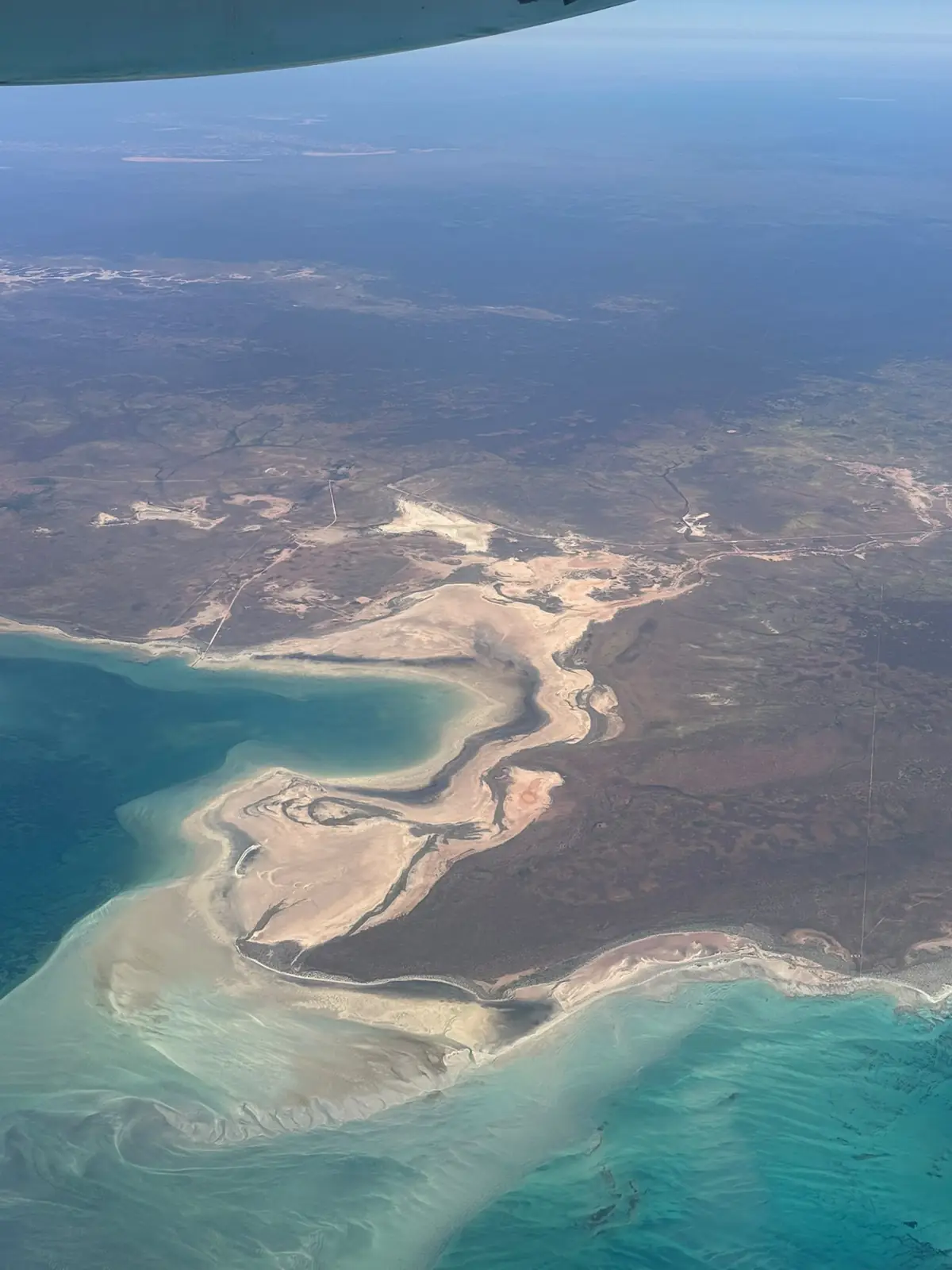
Archaeologists and Murujuga Aboriginal Corporation Rangers have recorded two new underwater Aboriginal archaeological sites off Murujuga (the Burrup Peninsula) in WA's Pilbara. Both were dry land until rising seas covered them at least 9,000 years ago. The findings were published in Quaternary Science Reviews on 14 October 2026.
Trace Archaeology, the heritage division of Trace Enterprises, summarises what was found and what it means for coastal and marine projects in Western Australia.
What the team found
The two sites sit on the seabed of Murujuga Sea Country in the Dampier Archipelago, off the Burrup Peninsula in the Pilbara, in roughly 10 to 15 metres of water. Divers recorded and recovered more than 20 stone artefacts across them, including cores, flakes and shaped tools.
One site is centred on a submerged freshwater spring. Before the sea came in, a reliable source of fresh water would have drawn people to camp and work there. The second site, on a feature the researchers call Maitland River Hummock, is a boulder-covered rocky rise beside an old river channel, a likely place to quarry stone.
Both places were dry land until sea levels rose after the last Ice Age. The researchers say the sites were drowned at least 9,000 years ago, so the artefacts on them could be considerably older. Across Australia, that rise in sea level covered more than 2 million square kilometres of the continental shelf.
Why the stone matters
The team tested the artefacts' raw materials with X-ray fluorescence. The two sites held different mixes of stone, which suggests they were used in different ways. Some pieces were made from stone found near Rosemary Island, about 23 kilometres from where the artefacts were found.
That points to people choosing particular stone and carrying it across a landscape that is now under the sea. Lead researcher Professor Jonathan Benjamin of Flinders University compared it to choosing a favourite kitchen knife.
Rangers in the water
Five Murujuga Aboriginal Corporation (MAC) Rangers trained as scientific divers for the project. Two of them, Malik Churnside and Richard Variakojis, surveyed the sites underwater and are co-authors of the paper.
Speaking to the ABC, the Rangers said the spring site still features in traditional stories, even though it has been under water for thousands of years. They also said Traditional Owners and elders bring perspectives and histories that Western science does not. MAC deputy chair Audrey Cosmos said the find opens the way for more research and scientific dating.
MAC director Vincent Adams said the Ngarda-Ngarli people have cared for Murujuga for at least 50,000 years. He said the work will help identify, understand and protect the whole cultural landscape, including Country that rising seas have covered.
Building on earlier discoveries
This is the latest result from underwater research at Murujuga that began in 2019. In 2020 the Deep History of Sea Country project reported what it described as Australia's first submerged Aboriginal archaeological sites, nearby at Cape Bruguieres and Flying Foam Passage. At Cape Bruguieres, divers recorded 269 artefacts in a seabed channel.
The Murujuga Cultural Landscape was inscribed on the UNESCO World Heritage List in 2025. Professor Benjamin told the ABC he expects Murujuga to become a global centre for underwater archaeology within about ten years, and that there could be thousands of sites still to find.
What protects sites under the sea
Submerged Aboriginal sites are not automatically protected in the way historic shipwrecks are. In state coastal waters, state heritage law is the main protection. In Western Australia that is the Aboriginal Heritage Act 1972.
Further out, in Commonwealth waters, the Underwater Cultural Heritage Act 2018 automatically protects vessels that have been in Australian waters for 75 years or more, and sunken aircraft. It can also protect other underwater heritage, including Aboriginal sites, but only once the Minister is satisfied that the site is of heritage significance.
What this means for coastal and marine projects in WA
Ports, pipelines, dredging, outfalls and other nearshore works can reach places that were dry land for most of human history. These findings show that Aboriginal sites can survive under the sea, and that they can be recorded without excavation.
For projects on the coast or in the water, it is worth asking early whether submerged landscapes are relevant to your heritage due diligence. That conversation should involve the Traditional Owners of the area. A desktop assessment can set out what is already known about an area and whether further work is needed.
Trace Archaeology works with Aboriginal Corporations, Traditional Owners and project teams across WA and the NT. If your project is near the coast, you can talk to our heritage team.
Sources
- Australia's oldest underwater archaeology reveals ancient life within a lost landscape, Flinders University, 14 October 2026, https://news.flinders.edu.au/blog/2026/10/14/australias-oldest-underwater-archaeology-reveals-ancient-life-within-a-lost-landscape/
- Newly discovered underwater sites off WA's Burrup Peninsula give clues to ancient ways of life, ABC News, 14 October 2026, https://www.abc.net.au/news/2026-10-14/newly-discovered-underwater-sites-off-burrup-peninsula-in-wa/107255826
- Benjamin, J. et al., Underwater archaeological discoveries demonstrate raw material selection and transport of stone artefacts: new evidence from the submerged cultural landscape of Murujuga, Western Australia, Quaternary Science Reviews, 2026, https://doi.org/10.1016/j.quascirev.2026.110307
- Stone tools found underwater off Western Australia come from a landscape the sea covered at least 9,000 years ago, Archaeology Magazine, 14 October 2026, https://archaeologymag.com/2026/10/stone-tools-found-underwater-off-western-australia/
- Seabed search uncovers Australia's first underwater Aboriginal sites and 8500-year-old artefacts, Murujuga Aboriginal Corporation, 2 July 2020, https://murujuga.org.au/seabed-search-uncovers-australias-first-underwater-aboriginal-sites-and-8500-year-old-artefacts/
- What does Australia's Underwater Cultural Heritage Act (2018) protect?, Deep History of Sea Country, 21 September 2020, https://deephistoryofseacountry.com/2020/09/21/what-does-australias-underwater-cultural-heritage-act-2018-automatically-protect/
Other latest news













Talk to our team
Our archaeologists, ecologists and town planners can tell you what this means for your site.