
Waste management plans in WA
A waste management plan shows how a WA development will store and collect waste. What councils ask for, WALGA guidelines and the WA waste strategy.
Many WA local governments ask for a waste management plan with a development application for apartments, grouped housing, mixed use and commercial projects. The plan shows how waste will be stored and collected once the building is occupied, and it often shapes the bin store, the driveway and the verge.
If your project needs a plan, our waste management plan service can prepare one to suit your local government's requirements.
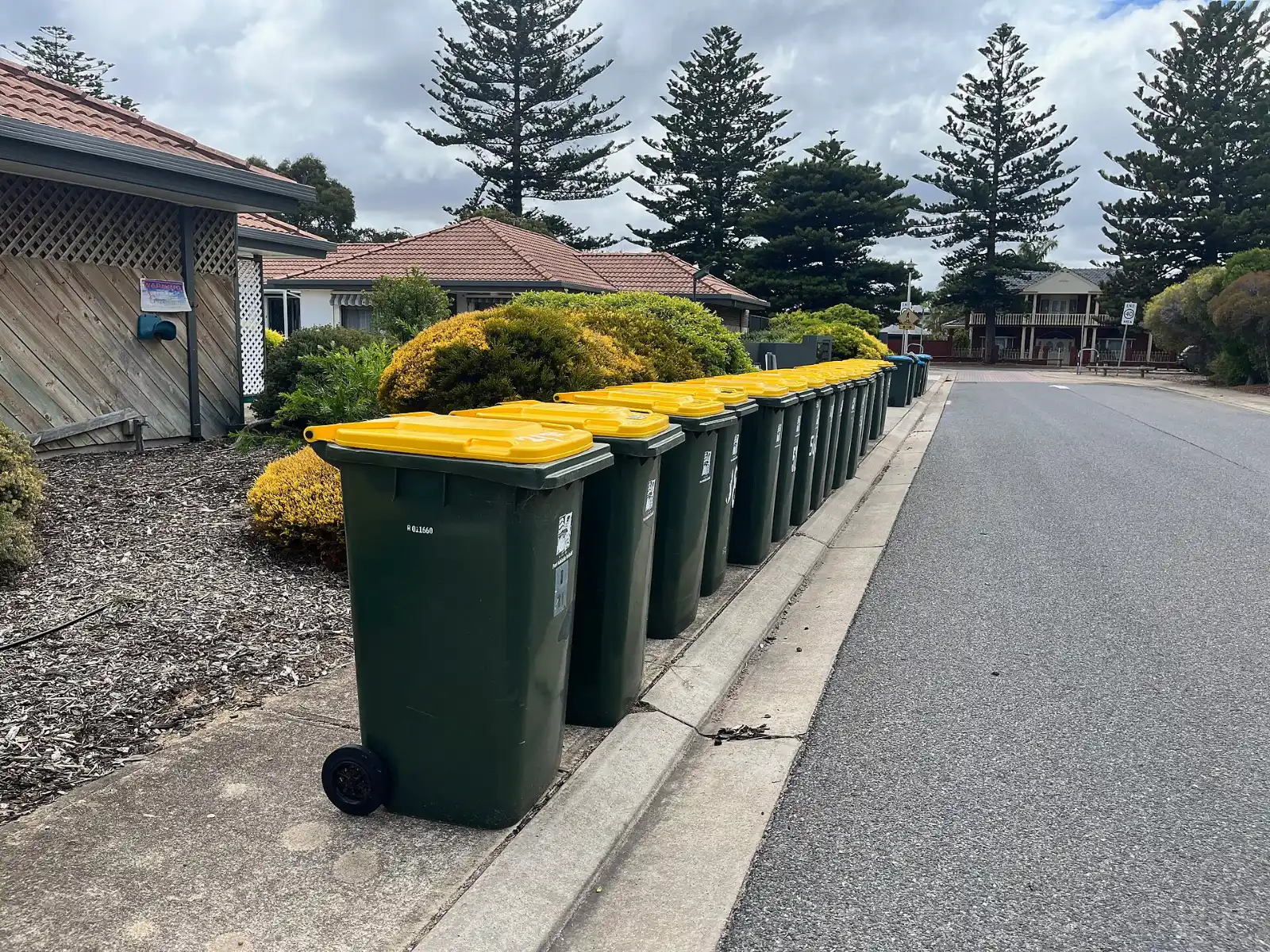
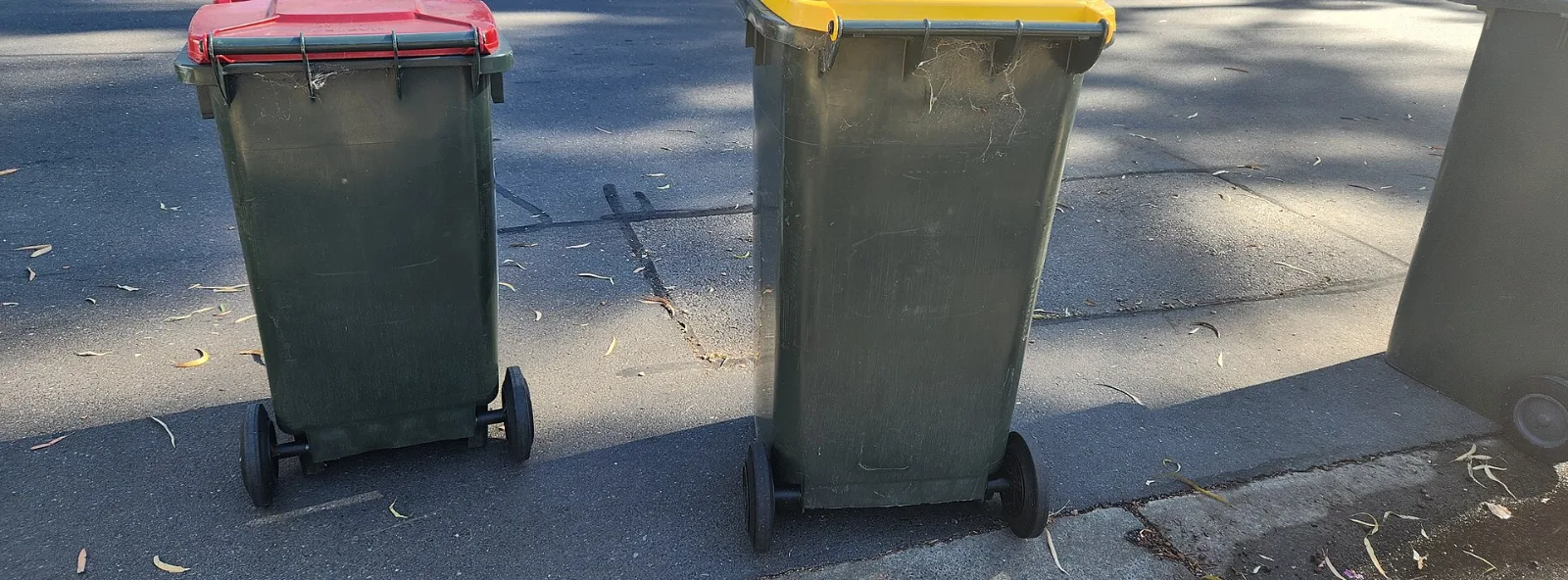
A waste management plan (WMP) is a short technical report that sits alongside the plans in a development application. It estimates how much waste the finished development will produce, then shows where the bins will go, how residents or tenants will reach them, and how a collection vehicle or crew will service them. Local governments use it to check that the design works for their collection system before they decide the application.
What is a waste management plan for a development?
The WMP translates the design into bin numbers and space. It starts from the number and size of dwellings or the floor area of commercial space, applies waste generation rates, and works out the bins needed for each waste stream at the planned collection frequency. Those bins then have to fit in a store that meets the local government's design standards.
A good WMP also covers what happens after occupation. The Western Australian Local Government Association (WALGA) guidelines and several local government guidelines ask the plan to say who is responsible for presenting bins, cleaning the store and keeping signage current over the life of the building. The City of Vincent's guidelines, for example, ask the WMP to explain how the plan will continue to apply, including through a strata management statement.
When do local governments ask for one?
There is no single statewide trigger. Each local government sets its own requirements, usually through a local planning policy or published waste guidelines. Some examples from current documents:
- City of Fremantle: Local Planning Policy 2.24 (amended 13 August 2025) requires a WMP for four or more grouped dwellings, multiple dwellings, constrained lots such as laneway or narrow frontage sites, all new non-residential development including mixed use, changes of use, and substantial additions likely to affect waste generation.
- City of Bayswater: its waste management guidelines for development applications (last updated 11 May 2026) make a WMP mandatory for five or more grouped dwellings, and also require one for shared bin storage, sites with insufficient frontage, commercial, industrial and mixed-use development.
- City of Vincent: its Waste Guidelines for New Developments (May 2020) say a WMP shall in most cases be submitted for two or more multiple or grouped dwellings, mixed use, and many non-residential proposals.
These thresholds differ, so check the policy for the local government where your site is. Some local governments ask for the WMP at lodgement. Others impose it as a condition of approval to be met before a building permit. WALGA's guidelines describe the WMP being submitted to support the conditions of approval process at development application or building permit stage.
What a waste management plan usually covers
WALGA's guidelines include a checklist of WMP contents, and local government guidelines follow a similar structure. The table below summarises the usual sections.
| Section | What it shows |
|---|---|
| Development summary | Location, number of floors, dwellings by bedroom count and intended uses |
| Waste generation | Estimated weekly volumes of general waste, recycling and FOGO, and the bins needed |
| Bin storage area | Size, layout, wash-down, ventilation, drainage and screening, shown on drawings |
| Internal transfer | How waste gets from each dwelling or tenancy to the bin store |
| Collection | Who collects, from where, how often, and vehicle access or verge space |
| Equipment | Any chutes, compactors or bin lifters, with specifications |
| Ongoing management | Who presents bins, cleans the store and keeps signage and education current |
In practice, every WMP has to connect the estimated waste volumes to a bin store that fits the site and a collection method the local government will accept.
Bin numbers and sizing
Bin numbers come from waste generation rates multiplied by dwelling numbers, divided by bin capacity and collection frequency. Bin sizes vary between local governments. The City of Fremantle's guidelines, for example, list 140, 240, 360, 660 and 1,100 litre bins, with bulk bins available for multi-unit and mixed-use developments. WALGA's guidelines note that the State waste strategy aimed for Perth and Peel local governments to introduce a three-bin system with a separate food organics and garden organics (FOGO) bin by 2025. Where your local government runs FOGO, the WMP needs to allow for all three streams.
Bin storage areas
WALGA's guidelines describe better practice bin stores. They recommend the store sits behind the building setback line and out of view from the street, holds at least one week of waste, and allows room for extra bins in future. Outdoor stores should have walls of at least 1.8 metres. The floor should be smooth and impervious and drain to sewer, with a tap, ventilation and self-closing, vermin-proof doors. Local governments can set their own standards, so the local guidelines take priority where they differ.
Collection access
The WMP has to show how bins will be collected. For kerbside collection, that usually means showing enough verge space to present the bins. For kerbside presentation, WALGA's guidelines allocate one square metre of floor area for each bin. For on-site collection, the plan needs to show a waste vehicle can enter, service the bins and leave. WALGA's guidelines say better practice design lets collection vehicles travel forward at all times, and that swept path analysis by a traffic engineer should be included. On-site collection may also need a management agreement between the strata or building manager and the local government.
The WALGA multiple dwelling guidelines
The main regional reference is WALGA's Waste Management Plan Guidelines for New Multi Dwelling Developments, Version 2.0, dated 2 September 2021. WALGA describes it as a better practice resource for local governments, architects and developers, and says they should use it to prepare and assess WMPs. It updates WALGA's earlier multiple dwelling guidelines.
A companion document, Better Practice Guideline: Resource Recovery from Multiple Dwelling Developments (2022), deals with existing apartment buildings and how local governments roll out FOGO and recycling services to them. Some local government policies, including Fremantle's, also refer to WALGA's commercial and industrial waste management plan guidelines for non-residential development.
Waste generation rates
Appendix A of the 2021 guidelines sets indicative weekly rates by dwelling size, with separate figures for developments of fewer or more than 12 dwellings.
| Stream and dwelling size | Fewer than 12 dwellings | More than 12 dwellings |
|---|---|---|
| General waste (FOGO system), 1 bedroom | 30 | 40 |
| General waste (FOGO system), 2 bedrooms | 50 | 60 |
| General waste (FOGO system), 3 or more bedrooms | 70 | 80 |
| Recycling, 1 bedroom | 40 | 20 |
| Recycling, 2 bedrooms | 60 | 40 |
| Recycling, 3 or more bedrooms | 120 | 90 |
| FOGO, 1 bedroom | 40 | 20 |
| FOGO, 2 bedrooms | 80 | 40 |
| FOGO, 3 or more bedrooms | 140 | 60 |
These rates are a starting point. Several local governments publish their own rates or calculators, and the local figures apply where they differ.
Construction and demolition waste
An operational WMP deals with waste once people move in. Waste from demolition and construction is usually handled separately, through a construction management plan or demolition management plan that a local government asks for as a condition of approval or before a building or demolition permit.
The City of Nedlands' construction and demolition management plan guidelines are one example. They require major developments to show on-site waste storage and bins on the site plan, keep waste off verges and footpaths, and reduce waste by reusing and recycling materials. The City encourages a 75% material recovery target. Demolition involving hazardous materials such as asbestos needs a separate hazardous material management plan, with friable asbestos removed by a licensed contractor.
The legislative and strategy context
The Waste Avoidance and Resource Recovery Act 2007 (WA) is the main waste law in WA. Its long title includes providing for waste avoidance and resource recovery, and for waste services by local governments. Section 5 sets out a waste hierarchy that puts avoidance at the top, followed by resource recovery (including reuse, recycling and energy recovery), with disposal last. Local governments collect municipal solid waste under this Act, which is why they set the bin systems and collection standards a WMP has to meet.
The State waste strategy is the Waste Avoidance and Resource Recovery Strategy 2030, released in 2019. According to the Waste Authority, its targets include increasing material recovery to 75% by 2030, and landfilling no more than 15% of waste generated in the Perth and Peel regions by 2030. The strategy is under review. The Waste Authority consulted on a draft, Beyond WAste 2030, from 18 November to 16 December 2025, and approved a final draft on 31 March 2026. At its 22 July 2026 meeting, the Waste Authority noted that the final strategy and roadmap were being considered by Government. Check the Waste Authority website for the current version.
How Trace Ecology helps
Trace Ecology prepares waste management plans for development applications across WA. We calculate waste volumes against your local government's rates, size bin stores, check collection access and verge space, and coordinate with your architect and traffic engineer so the WMP matches the plans. See our waste management plan service and the full range of environmental services.
For related reading, see Environmental approvals in WA and R-Codes explained, which covers the density codes behind many grouped and multiple dwelling proposals. Contact us to get a waste management plan scoped for your site.
Frequently asked questions
Do I need a waste management plan for a development application in WA?
It depends on the local government and the type of development. Many require one for multiple dwellings, grouped dwellings above a set number, mixed use and commercial development. Check the local planning policy or waste guidelines where your site is.
What are the WALGA waste management plan guidelines?
The current WALGA document for new apartments and grouped housing is the Waste Management Plan Guidelines for New Multi Dwelling Developments, Version 2.0, dated 2 September 2021. It gives better practice guidance on bin stores, collection and waste generation rates, and many local governments refer to it.
How many bins does an apartment building need?
It depends on the number and size of dwellings, the waste generation rates the local government uses, the bin sizes available and how often bins are collected. The WMP sets out this calculation for each waste stream.
Does a waste management plan cover construction waste?
Usually not. An operational WMP covers waste after occupation. Construction and demolition waste is generally dealt with in a separate construction or demolition management plan required by the local government.
This article is general information as at November 2026, not legal advice.
References
All accessed 17 November 2026.
- Waste Avoidance and Resource Recovery Act 2007 (WA), official version from 7 December 2024 (long title, s 5). legislation.wa.gov.au: Waste Avoidance and Resource Recovery Act 2007
- WALGA, Waste Management Plan Guidelines for New Multi Dwelling Developments, Version 2.0, 2 September 2021. walga.asn.au: Waste Management Plan Guidelines for New Multi Dwelling Developments
- WALGA, Better Practice Guideline: Resource Recovery from Multiple Dwelling Developments, 2022. walga.asn.au: Better Practice Guideline for Multi Dwelling Developments
- Waste Authority, Strategic direction (last updated 2 April 2026). wasteauthority.wa.gov.au: Strategic direction
- Waste Authority, Outcomes of the Waste Authority's annual planning day and meetings held on 31 March and 22 April 2026 (13 May 2026). wasteauthority.wa.gov.au: Meeting outcomes, March and April 2026
- Waste Authority, Outcomes of the Waste Authority meeting held on 22 July 2026 (7 August 2026). wasteauthority.wa.gov.au: Meeting outcomes, July 2026
- Department of Water and Environmental Regulation, Have your say in WA's waste strategy review (closed 16 December 2025). consult.dwer.wa.gov.au: Waste strategy review
- City of Fremantle, Local Planning Policy 2.24 Waste Management Plans (amended 13 August 2025). fremantle.wa.gov.au: LPP 2.24 Waste Management Plans
- City of Fremantle, Waste Management Guidelines for New Developments (undated, published 2025). fremantle.wa.gov.au: Waste Management Guidelines for New Developments
- City of Bayswater, Waste management guidelines for development applications (last updated 11 May 2026). bayswater.wa.gov.au: Waste management guidelines for development applications
- City of Vincent, Waste Guidelines for New Developments, May 2020. vincent.wa.gov.au: Waste Guidelines for New Developments
- City of Nedlands, Construction and Demolition Management Plan Guidelines. nedlands.wa.gov.au: Construction and Demolition Management Plan Guidelines
Other latest news














Talk to our team
Our archaeologists, ecologists and town planners can tell you what this means for your site.